

In the wake of the 1965 Indo-Pak War, the Indian Air Force confronted a glaring vulnerability that had compromised the nation’s defence infrastructure: the absence of a robust, coordinated radar and communication system. Pakistani jets had been able to breach Indian airspace, exploiting the serious gaps in radar coverage. These vulnerabilities posed an imminent threat to national security that India could no longer afford to overlook.
Recognising the urgent need for transformation, Indira Gandhi, then the Prime Minister of India, took decisive action. Her leadership was instrumental in spearheading a comprehensive overhaul of the country’s air defence system. At the heart of this initiative was creating the Air Defence Ground Environment System (ADGES). This monumental and audacious project would reshape not only the Indian Air Force but also India’s defence capabilities for decades to come.
Both seasoned and young Indian engineers rose to the occasion, taking on the immense challenge of developing advanced radar systems and their associated equipment within India. This focus on indigenisation became a defining hallmark of the ADGES project, which saw most of its equipment manufactured domestically, a testament to the country’s growing technical prowess.
The Need for ADGES
Before the early 1960s, India’s radar capabilities were rudimentary at best. The Indian Air Force had only seven light transportable radars, mainly deployed along the northern borders, serving as early warning stations. These radars, however, were outdated, cumbersome, and severely limited in operational capability. They only effectively detected enemy aircraft at high altitudes, leaving vast blind spots at lower altitudes. This glaring deficiency became particularly evident during the 1962 Sino-Indian War when India’s air defence capabilities were woefully inadequate against potential aerial threats. Furthermore, the lack of an integrated communication network compounded the issue, making real-time coordination and response to aerial incursions impossible.
In response to these vulnerabilities, the government sanctioned the acquisition of additional radar systems in late 1962. This included eleven High Power Static Radars, eight Mobile Radars, and ten Light Transportable Radars to bolster coverage, especially over northern India. Part of this equipment was to be supplied under the U.S. Military Assistance Program (USMAP), with six of the High Power Static Radars intended for deployment along the northern and northeastern borders. The plan also called for a microwave communication network to interconnect these radars, forming the rudimentary framework for a future air defence system.
However, geopolitical complexities soon arose. After the 1965 Indo-Pak War, the United States imposed an embargo on military aid to India, halting the delivery of critical equipment, including the much-needed Troposcatter Communication System. The suspension of U.S. military assistance left India with incomplete radar coverage and unreliable communication networks. This left the country vulnerable, further exacerbated by the continued reliance on outdated radars and civilian communication networks, such as the Post & Telegraph (P&T) system.
The 1965 war further underscored the urgency of addressing these deficiencies. The Russian P-30M Mobile Radars and American Star Sapphire Radars deployed between 1963 and 1966 provided some coverage. However, significant gaps remained, especially in the Rajasthan and western border areas. These radars also struggled to detect low-flying aircraft, and Pakistan’s use of electronic countermeasures further diminished their effectiveness.

This untenable situation demanded immediate action. 1966, the Air Headquarters drafted a comprehensive plan to fortify India’s air defence capabilities. The need for an advanced, integrated air defence system became apparent after preliminary discussions with the Ministry of Defence. This new system must provide comprehensive radar coverage across Indian airspace, ensure real-time communication between all air defence units, and include the necessary infrastructure for long-term maintenance and training.
The Vision Takes Shape
In February 1970, the government approved the ambitious ADGES plan. Indira Gandhi chaired the newly formed Radar & Communications Board (RCB), signalling the importance she placed on the success of this national project. The board included senior figures from the government and military, including the Defence Minister, Defence Secretary, and Chief of Air Staff, ensuring that ADGES would remain a top priority for the nation’s security apparatus.
The ADGES initiative was monumental in scope and ambition. Its primary objectives were threefold: establish gap-free radar coverage over the entirety of Indian airspace, build a fast and reliable communication system to interconnect all radar stations and command centres, and create the infrastructure needed to support ongoing maintenance, training, and operational readiness.
The ADGES plan was structured into four phases over 12 years, with an initial allocation of Rs. 185 crore. This phased approach enabled the gradual expansion of radar and communication coverage and the construction of necessary infrastructure across the country. Phase I (1966–1969) focused on installing radar and communication systems in key northern and northeastern sectors. Phase II (1969–1974) extended radar coverage into western and central India. In Phase III (1974–1977), radar capabilities were strengthened along the western border to counter the increasing threats from Pakistan and China. Finally, Phase IV (1977–1979) established additional infrastructure, including dedicated training and maintenance facilities.
RSIUs (Radar System Installation Units) and CSIUs (Communication System Installation Units) were created nationwide to support this vast undertaking. These specialised units ensured that the installation of radar systems was completed on time and to precise specifications, allowing the ADGES network to function effectively once operational.
Building The Radar Network
One of the most critical components of the ADGES system was the development of its radar network, designed to provide comprehensive coverage across Indian airspace. The plan called for installing High Power Static Radars, Mobile Radars, and Light Transportable Radars to ensure the detection of enemy aircraft at both high and low altitudes.
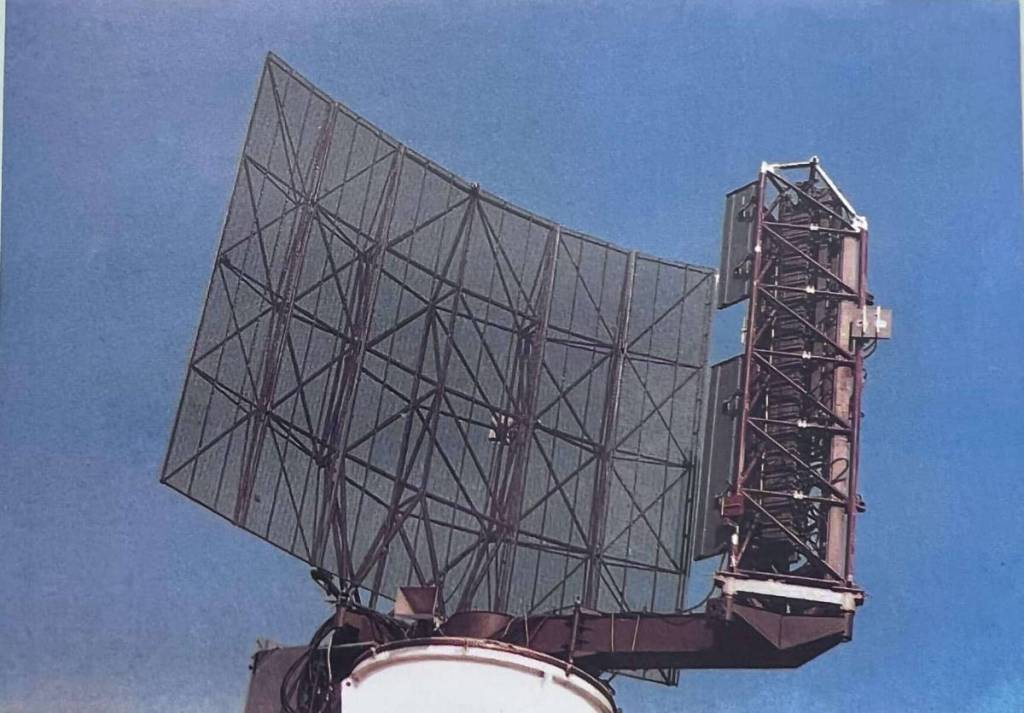
At the heart of this network was the THD-1955 High Power Static Radar, manufactured by Thomson-CSF of France. India initially purchased one complete radar system from Thomson-CSF, with components for two additional radars to be assembled domestically by Bharat Electronics Limited (BEL). These radars offered long-range detection capabilities, covering India’s northern borders with a range of 230 Nautical Miles and an altitude ceiling of 75,000 feet. In total, 12 THD-1955 radars were installed under the ADGES plan, with BEL Ghaziabad responsible for their production in India. The first of these radars, at 33 Signal Unit, became operational at Jodhpur in 1976, marking a significant milestone in India’s radar coverage.

Supporting these radars were the PSM-33 radars, developed in collaboration with Thomson-CSF and BEL. The PSM-33 provided medium-power, mobile radar capabilities, detecting targets up to 140 Nautical Miles away. These radars were crucial for tactical deployments in key regions. They offered greater flexibility than the static THD-1955 due to their mobility and electronically steered phased array technology, allowing for faster and more accurate target detection. By 1986, the PSM-33 was upgraded to the TRS-2215 radar, extending its range to 235 Nautical Miles and tracking capabilities to an altitude of 130,000 feet. The first PSM-33 radar was installed around 1983 at Naraina.

The Electronics and Radar Development Establishment (LRDE) developed the INDRA (Indian Doppler Radar) series to address gaps in low-altitude detection. These radars were designed to detect low-flying aircraft, complementing the high-altitude THD-1955 and PSM-33 systems. India aimed to acquire 75 INDRA radars, including 6 MK-I and 69 MK-II versions, all mobile and rapidly deployable to meet emerging threats.
Additionally, the radar network incorporated Identification Friend or Foe (IFF) Mk-X equipment, which allowed for distinguishing between friendly and enemy aircraft. Initially mounted on the THD-1955 radars, IFF systems were later integrated across all major radar platforms, including the PSM-33 and TRS-2215. By 1978, these systems had evolved into solid-state technology, making them more reliable, easier to maintain, and enabling more automated aircraft identification.
Communication Network: The Backbone of ADGES
The communication system had to overcome several challenges, including transmission media limitations, interface requirements, frequency availability, cost constraints, and future scalability. RCPO opted for a multi-channel, point-to-point communication system using Troposcatter and Line of Sight (LOS) links to meet these demands. The system employed a star connectivity model, ensuring reliable and resilient communication between radar stations and command centres.
The LOS System managed short—to medium-range communication over 10 to 50 nautical miles, transmitting high-frequency signals in straight lines, ideal for clear line-of-sight regions. Troposcatter Systems, on the other hand, were essential for long-range communication. The bouncing microwave signals off the troposphere extended communication beyond 11 Nautical Miles. These systems were particularly useful in rugged or mountainous terrain where traditional LOS communication was impractical.
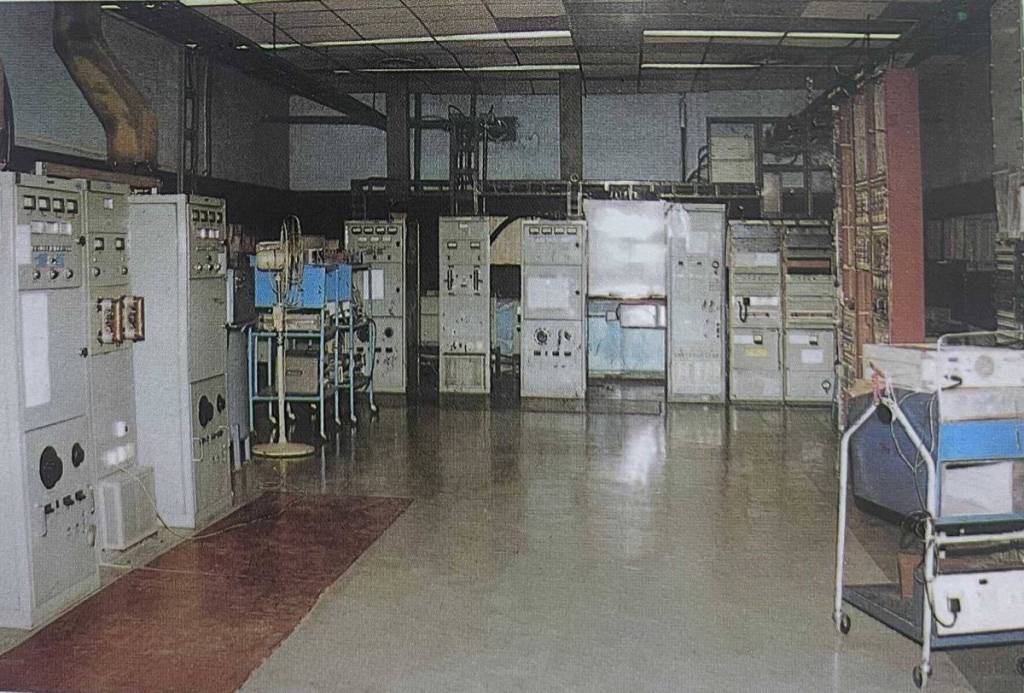
The communication network utilised frequency division multiplexing, allowing 60 to 120 channels per link. Much equipment, such as Line Conditioning devices, was initially imported. However, India developed indigenous solutions over time through Bharat Electronics Limited (BEL) and Indian Telephone Industries (ITI). Power amplification in troposcatter systems, achieved using 1 KW and 10 KW Klystrons, was initially sourced from abroad but was later manufactured domestically by BEL. Hindustan Teleprinters provided communication terminals, teletypewriters, and related equipment to complete the network.
Performance objectives for the communication network included 99.99% reliability, 90% user satisfaction (with 90% of calls rated as good or better), a bit error rate of 1 in 1,000,000 for data rates up to 2400 baud, and a 95% confidence level in achieving the desired grade of service.
Given the large scale of the ADGES communication network, a hierarchical control structure was essential. The system was divided into 11 Subcontrol Centers (SCCs) and one Master Control Center (MCC) in Basant Nagar, New Delhi. The MCC oversaw the entire network, while the SCCs managed local communication links and relayed data to the MCC.
The ADGES communication network was rolled out in four distinct phases. Phase I (1973–1979) established 18 links in Northern India. Phase II (1977–1982) added 14 links in Western India. Phase III (1980–1984) created five links in Central India. Finally, Phase IV (1983–1987) implemented ten links in the Northeast and other key areas. Additional extensions were made in Central and Western India between 1986 and 1987 to accommodate growing communication needs.
Infrastructure, Logistics and Maintenance
The RCPO reported directly to the Defence Secretary and was headed by a Project Director, typically an Air Marshal from the Indian Air Force’s Electronics Engineering branch. One of the most notable figures to lead the RCPO was AVM Chaman Lal Mehta, personally selected by Mr. Sarin, the Defence Secretary at the time, due to his exceptional abilities. AVM Mehta remained Project Director for seven years, even after his official retirement from the IAF. Under his leadership, the RCPO was housed in modest hutments near the Medical Inspection (MI) room of Air Force Station Delhi (Racecourse).

The RCPO’s technical division was located separately in a rented building in Safdarjung Enclave, adjacent to the now-defunct Kamal Cinema. This unit housed the Chief Systems Engineer (an Air Commodore) and individual Project Engineers (Wing Commanders), each responsible for specific technical aspects of the ADGES project, including Radar, Communication, Electrical, and Digital Systems. This team was also supported by a Chief Engineer and a Lieutenant Colonel from the Army Corps of Engineers, overseeing the civil works necessary for establishing the ADGES network across India.

Given the scale and complexity of the ADGES system, a highly coordinated approach to maintenance and logistics was essential. To maintain operational efficiency, a network of specialised depots was established. The Radar and Communications Project Depot (RCPD), set up at Palam, New Delhi, in 1973, became the logistical backbone of the ADGES system. The depot was responsible for procuring, testing, and maintaining radar and communication equipment and coordinating the installation of radar systems across India.
The RCPD was critical in successfully installing 27 THD, PSM, TRS Radars, communication units, and Troposcatter systems. These installations took place in some of the most challenging terrains, from the deserts of Rajasthan to the peaks of the Himalayas and were vital for building India’s comprehensive air defence infrastructure.

Additionally, the Area Maintenance Support Facility/Central Electronics Standards and Calibration Laboratory (AMSF/CESCAL), later renamed the ADGES Maintenance and Standards Establishment (AMSE), ensured that radar systems were maintained to stringent military standards. The AMSE, responsible for managing repairs and upgrades, closely coordinated with field teams to provide depot-level repairs for static and mobile radar units, Troposcatter systems, and LOS equipment. AMSE was renamed as 13 Base Repair Depot on 20 Oct 2004.
The physical infrastructure supporting the ADGES network was equally vital to its success. The Military Engineering Services (MES) was essential in constructing the infrastructure for radar stations, communication hubs, and support facilities. MES was responsible for constructing administrative offices, technical accommodations, and buildings housing radar stations. This also included installing critical systems such as power supplies, air-conditioning units for equipment rooms, and other essential civil works that ensured the ADGES network could operate without disruption.
Over the years, MES completed over 1,400 projects across 83 different locations, ensuring that the ADGES system was supported by robust and reliable infrastructure. These projects spanned a wide range of terrains, from the scorching deserts of Rajasthan to the challenging mountainous regions of the north and northeast.
Upgrades
The ADGES system was far from static; it required constant upgrades and maintenance to stay relevant and effective in an ever-evolving threat environment. By the 1990s, many radar systems installed during the early phases of the ADGES plan were nearing the end of their operational lifespans, necessitating mid-life upgrades to extend their usability. These upgrades ensured that radar and communication systems could continue providing robust defence capabilities.
Critical radar systems, such as the THD-1955 and PSM-33, underwent regular maintenance and technological upgrades. The Automatic Data Handling Systems (ADHS), initially developed by the Tata Institute of Fundamental Research (TIFR), were modernised under the Futuristic Automatic Data Handling System (FADHS) initiative. This project enhanced processing speed, data capacity, and overall efficiency, ensuring the ADGES system could keep pace with technological advancements. This networked system evolved through such ambitious projects, which Sqn Ldr Minty Aggarwal used during the 2019 Balakot skirmish to intercept and track Pakistan’s F-16.
As technology advanced, fibre-optic communication systems were gradually integrated into the ADGES network, significantly improving data transmission speeds, noise resistance, and security. By the 1990s, ADGES had fully embraced digitisation, replacing analogue links with PCM/TDM equipment, increasing channel capacity and meeting the growing demands of communication networks.

Troposcatter systems also underwent significant upgrades, with advanced compression techniques boosting their channel capacity and improving communication security. Additionally, Line of Sight (LOS) systems received upgrades in both transmission power and reliability. Incorporating fibre-optic links further enhanced data transmission, providing better noise resistance and protecting communication channels from unauthorised interception.

Recognising the limitations of relying on a single communication medium, satellite communication was introduced into the ADGES network during the 1990s. With Troposcatter and LOS links potentially vulnerable during conflicts, satellite communication was implemented as a reliable backup to ensure continuity in information flow. The RCPO installed a Satcom network as part of the ADGES contingency system, covering India’s entire expanse with 42 Earth stations. This system utilised advanced coding and compression technologies, providing a robust communication solution, especially in the northern and southwestern sectors where terrain and conflict conditions were more challenging.
Training: Building a Skilled Workforce
The rapid technological advancements of the ADGES network necessitated a highly skilled and well-trained workforce capable of operating, maintaining, and upgrading the system’s complex radar and communication equipment. Recognising this need, the IAF set up a comprehensive training program to ensure personnel were equipped with the technical expertise required to manage the ADGES system.
In 1973, the Tropo Training School was established at Safdarjung Airport in New Delhi to provide training in installing, operating, and maintaining microwave communication systems. Initially housed in an aircraft hangar known as the Bellman Hangar, the school trained a small group of officers, airmen, and civilians in critical radar and communication technology. The school’s role expanded significantly as the demand for specialised training grew.
By 1975, the Tropo Training School had been relocated to Jalahalli, Bangalore, and renamed the ADGES Training Institute (ADGESTI). This move was made to accommodate the growing need for advanced technical training and to consolidate all electronic training under one roof. At Jalahalli, ADGESTI developed into a full-fledged technical training facility with up-to-date radar systems, communication equipment, and sophisticated Data Handling Systems.
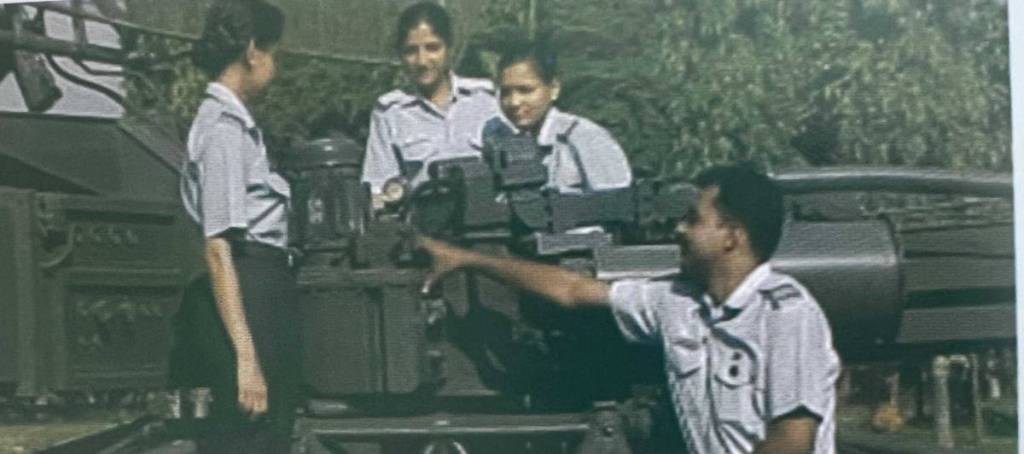
By the late 1990s, ADGESTI had matured into a centre of excellence, offering 36 courses, including cross-training, refresher, and capsule courses. These courses were designed to meet the evolving needs of the IAF, preparing officers, airmen, and civilian technicians to handle the latest technologies incorporated into the ADGES network. The training program emphasised practical, hands-on experience, allowing personnel to conduct “on-the-job” training on live equipment, ensuring they were fully prepared for operational duty.
Legacy: A Secure Indian Sky
Implementing the ADGES marked a watershed moment in India’s defence capabilities. What began in the 1960s, when India’s radar technology was antiquated and inadequate, evolved into a sophisticated and comprehensive network that transformed the Indian Air Force’s ability to secure the nation’s airspace. By the late 1970s, ADGES was fully operational, providing the Indian Air Force with the ability to detect, track, and respond to airborne threats with unprecedented speed and accuracy. It fortified India’s skies, offering robust protection against enemy aircraft and enhancing national security.
ADGES safeguarded India’s skies and laid the foundation for future advancements in air defence technology. It symbolised India’s move towards integrating cutting-edge innovation with indigenous technological capabilities. Bharat Electronics Limited (BEL) and the Electronics and Radar Development Establishment (LRDE) were central to this indigenisation effort, developing domestic critical radar and communication technology. This reduced India’s reliance on foreign suppliers and fostered a culture of self-reliance and innovation within the nation’s defence sector.

The technological advancements ushered in by ADGES maintained India’s position at the forefront of global radar and communication systems for decades. However, technological evolution necessitated a new generation of air defence systems by the mid-2000s. Around 2006, ADGES was officially phased out, making way for a more advanced ground network that represented yet another leap in technology.
This post is a tribute to the countless unsung heroes—officers and technicians from the Indian Air Force’s Engineering Branch—who worked tirelessly to build and sustain this groundbreaking system over three decades. The officers assigned to the RCPO were handpicked for their excellence, often selected after completing their MTechs from top-tier institutions like IITs, where they consistently excelled. Their postings were based on strict qualifications, and their contributions were marked by sheer creativity, frugality, and dedication.
Air Cmdes S Chandramowliswaran, Suryanarayana Rao, Wg Cdrs S Parhee, S Krishnaswami, RS Bhola, GS Sandhu, and Surinder Singh were some key founding members.
The Indian government was so impressed with the work of the RCPO, the first engineering organisation of its kind, that it became a model of systems engineering in the country. The officers who worked there, such as then Wg Cdrs NC Kaushal, RP Sharma, Iqbal Singh, RS Raman, and then Gp Capts SB Majumdar, DK Hegde, P Chakrobarty, along with then Air Cmde’s RC Kakar, KR Bali, PK Ghosh, and AVM Rameshwar Nath, received recognition for their service, earning Seva Medals for their outstanding contributions.
Yet beyond the decorated few, scores of individuals laboured quietly behind the scenes, ensuring that every radar, communication link, and infrastructure was flawlessly operational. Their work lives on, not just in the tangible systems they helped build, but in the air we breathe under skies they ensured would remain secure for generations.
I want to express my deep gratitude to the numerous technical officers who provided invaluable insights, notably Wg Cdr Pritam Tara Singh and Air Commodore KR Bali. Additionally, I drew heavily on the work of Wg Cdr DM Mathur, VSM, whose publication on this subject from 25 years ago remains a crucial source of knowledge.
⭐ This post previously received 5.0/5 from 145 readers in our legacy system.


Leave a Reply