
In the pivotal year of 1947, the Indian Air Force stood at a historic crossroads. As India neared its independence, the question of who would lead the nascent air force became a subject of intense deliberation. This post delves into the intricate and often overlooked story of how the IAF’s first chief was decided upon during a critical 30-day period in June and July of 1947. It is a tale marked by hectic negotiations, strategic parleys, and a surprising twist involving Subroto Mukerjee, who would later become the first Indian Chief of the IAF.
The key figures in this narrative were Air Marshal Hugh Walmsley, then Air Officer Commanding-in-Chief in India, Lord Louis Mountbatten, the last Viceroy of India, Prime Minister Jawaharlal Nehru, Muhammad Ali Jinnah, and General Claude Auchinleck, the Commander-in-Chief of the Indian Army.
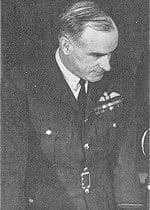
Three critical questions needed answering: Would there be a separate chief for each military service or a singular commander-in-chief? What rank would this officer hold? And most importantly, who would assume this pivotal role? These questions were being weighed simultaneously, with Air Marshal Walmsley initiating the conversation. On July 1, 1947, he forwarded his recommendations to Lord Louis Mountbatten, though the ultimate decision rested with Jawaharlal Nehru and Muhammad Ali Jinnah. Walmsley’s suggestions were the initial spark in a complex decision-making process.

The name of Air Marshal Sir Thomas Elmhirst, to be the Chief of Pakistan Air Force seems to have been at the insistence of General Auchinleck, who wrote the attached letter directly to Mountbatten on the recommendation.

Lord Mountbatten, known for his diplomatic acumen, quickly advanced the discussions. His insistence that Air Marshal Sir Thomas Elmhirst, initially considered for the Chief of the Pakistan Air Force, should also be a candidate for India’s top air force position set a new direction for the negotiations. Mountbatten’s move would later prove pivotal in the final decision.

The views of Nehru and Jinnah, as the respective leaders of soon-to-be independent India and Pakistan, were crucial. Their agreement, influenced by Mountbatten’s recommendations and the strategic counsel of General Auchinleck, led to a consensus on having an Air Officer Commanding in Chief from the Royal Air Force with the rank of Air Vice Marshal. This unexpected decision had significant implications, particularly for Indian officer Subroto Mukerjee.

Subroto Mukerjee, who had positioned himself as a strong candidate for the leader of the Indian Air Force, found himself at a crossroads. His reaction to the decision to have an RAF officer lead the IAF was notably selfless. In meetings with Mountbatten and others, Mukerjee expressed his support for the decision, prioritising the needs of the service over his ambitions. His stance was that of a true leader, concerned more about the parity of the IAF with the Army and its future direction than his immediate appointment.

Despite the initial surprise, Walmsley identified AVM Perry-Keene as a suitable choice for India, given his extensive experience there. However, the dynamics changed drastically when Nehru intervened, suggesting Air Marshal Elmhirst for the position. Nehru’s influence, coupled with the respect Auchinleck commanded, altered the course of the decision-making process.

AVM Perry-Keene was a fine choice because he had spent considerable time in India across roles from 1935 and was reasonably well known amongst officers in India.

At Walmsley’s insistence on 18 July 47, Mountbatten met with Mukerjee and was surprised at his views – Mukerjee put the needs of the service above his & was supportive of a senior RAF officer. He was concerned about parity with the Army and hoped to be Chief in 2-3 years. 10/

Mukerjee was aligned with Mountbatten, Walmsley, and Perry-Keen and it seemed on 22nd July 47, Perry- Keen would make the Chief of the IAF, but a twist was in the offing. 11/

On 21st July, Nehru wrote to Mountbatten encouraging him to consider Air Mshl Elmhirst for IAF. Apart from his and his Defence minister’s opinion, Auchinleck would have weighed in as well, being close to Nehru and held in high esteem by him.

The critical turning point came with Nehru’s meeting with Elmhirst on July 23, 1947. Nehru’s persuasive skills came to the forefront as he convinced Elhmirst to consider the role. This decision elevated the rank of the chief to Air Marshal for the IAF, aligning with the stature of Army leadership and fulfilling one of Mukerjee’s concerns.

Nehru convinced Elmhirst on the 26th of July, and he decided to become chief. While Mukerjee had his wish of having an Air Mshl, at par with the Army, come true, unknown to him then, he would have to wait seven years to become Chief himself as Air Mshl. 14/

In parallel, Mountbatten aligned Jinnah to have a very capable and willing AVM Perry-Keen be the Chief of PAF.

On July 27, 1947, the announcements were made public. Air Marshal Elmhirst was appointed the first Chief of the Indian Air Force, and Air Vice Marshal Perry-Keene was appointed the first Chief of the Pakistan Air Force. While Mukerjee’s vision of an Air Marshal at the helm of the IAF was realised, his ascent to the position would come only years later, marking a significant wait in his distinguished career.

Subroto Mukerjee’s eventual rise to the Chief of the Air Staff in 1954, becoming the first Indian to hold this post, was a testament to his dedication, skill, and patience. His initial support for an RAF officer as the first Chief of the IAF, despite being a strong contender himself, demonstrated his commitment to the greater good of the service and the country.
As we reflect on this pivotal chapter in the history of the Indian Air Force, we are reminded of the intricate dance of leadership, diplomacy, and vision that is essential in shaping the destiny of military forces.
Originally published on Twitter


Leave a Reply