

If you’ve ever travelled along the Yellow Line of the Delhi Metro, the Arjangarh station might have caught your eye. Unbeknownst to many, this seemingly ordinary location conceals a story of extraordinary resilience. When a vital radar supplier suddenly abandoned India, the nation faced a dire national security crisis. It was then that the engineers of the Indian Air Force, with their unwavering bravery and dedication, rose to the challenge, making Arjangarh and five similar radar stations across the country operational. These unsung heroes, with their hearts and minds poured into solving a crisis threatening our nation’s security, are a testament to their indomitable spirit and commitment, inspiring us all.
The Star Sapphire
The 1962 conflict between India and China was a turning point in international military alignments. It redefined the relationship between India and China and sparked a new era of collaboration between India and the United States of America. Previously indifferent, the United States opened avenues for robust military assistance and cooperation post-war, with the Indian Air Force emerging as a beneficiary of this newfound partnership.
In November 1963, the IAF participated in its first multilateral exercise, a significant milestone at Palam and Kalaikunda. This exercise saw the Royal Air Force deploy a squadron of Javelins, the Royal Australian Air Force contribute Canberras, and the United States Air Force dispatch a squadron of F-100s and two mobile radar units equipped with MPS 11 and 16 radars. In parallel, nearly a hundred Indian fighter pilots, in their pursuit to enhance their skills, subsequently honed their skills on the F-86 Sabres at Nellis Air Force Base over the following two years.
The strategic narrative took a significant leap with introducing the Star Sapphire Radar system. Before this, the Pakistan Air Force had enjoyed a distinct advantage with its superior radar coverage, facilitated by American technological support since the late 1950s. In contrast, India depended on the increasingly obsolete Marconi Radars from the United Kingdom. Recognising this disparity, the United States agreed to equip India with six advanced Star Sapphire Radar units post-1962, strategically enhancing India’s defensive posture against potential threats from China, a condition linked to military aid. FPS-100 ( Surveillance) and FPS-89 ( Height Finder) were the Radars in the Star Sapphire Package.

The first Star Sapphire Radar unit was commissioned at Arjangarh on 26 August 1964, and by 7 July 1965, all six units were installed. However, these units were not operational when the Indo-Pak War broke out in September 1965. In a dramatic response, the United States halted military support to India. Key contractors such as Dynamics Corporation of America, General Telephone and Electronics, Westinghouse, Bendix, and Philco/Ford had contracts under the U.S.-financed Peace Indigo project to integrate the Star Sapphire radar system. Their abrupt withdrawal left the installations incomplete and deprived the IAF of critical technical knowledge and documentation. The lack of a fully implemented layout for each planned site meant that the substantial infrastructure investments—such as power generation units, diesel engines, and GE alternators—were left underutilised indefinitely.
Electronic Engineering and Installation Unit
In response to the abrupt cessation of American support in 1965, the Indian Air Force took decisive steps to ensure the operational readiness of critical defence infrastructure. To this end, the Electronic Engineering and Installation Unit (EE&IU) was established at Safdarjung Airport, under the jurisdiction of the Air Force Station at Race Course, located near the current Prime Minister’s residence. The primary mandate of the EE&IU was to complete the intricate installation processes of advanced radar systems and ensure their operational functionality. Fortuitously, several of the unit’s initial officers and airmen had received training in the USA before the war, which proved invaluable.

Commanded by seasoned officers from the Signals branch of the IAF, the EE&IU faced a formidable challenge. The equipment, featuring state-of-the-art technology such as Search Radars, Height-Finder Radars, display systems, and communication systems, required expert handling and integration—expertise initially absent within the team. Moreover, the task was compounded by the lack of complete installation equipment, necessitating an innovative problem-solving approach.
The EE&IU personnel relied on many technical drawings and publications throughout the installation process to meet the stringent installation standards expected of such sophisticated technology. Whenever they encountered deficient or unserviceable items, the team conducted meticulous market research to identify reliable repair agencies and suppliers. This proactive approach ensured that the installation program proceeded smoothly, without delays, and adhered closely to the planned schedule. The team’s efforts culminated in a successful setup that was cost-effective and executed without any incidents.

The EEIU’s operational tasks were divided between two units, each led by a distinguished officer. Wing Commander Unjalur Santhanagopalkrishna Chandramowleswaran headed one unit, while Wing Commander Vasant Marutirao Warty led the other. Both officers were among the first direct-entry technical officers to join the IAF in the early 1950s, bringing a wealth of experience and technical insight to the project. Their leadership was instrumental in navigating the complex challenges of installing and operationalising the radar systems.
The Impact
Once operational, the Star Sapphire radar systems significantly bolstered the Indian Air Force’s defensive capabilities, serving effectively for nearly two decades. These systems provided robust air defence coverage until more advanced radar technologies eventually superseded them. Despite facing subsequent sanctions for spares after the 1971 War, their impact during their tenure was substantial.
During the 1971 War, the strategic utility of the Star Sapphire radars was particularly evident. Positioned on the western front, these systems played a pivotal role in the IAF’s operations, contributing to many tactical victories. The radars’ effectiveness in real-time combat scenarios was widely acknowledged, leading to numerous gallantry awards for the personnel involved.
The exceptional leadership displayed by Wing Commander Unjalur Santhanagopalkrishna Chandramowleswaran and Wing Commander Vasant Marutirao Warty during this critical period did not go unnoticed. Both officers were honoured with the prestigious Vishisht Seva Medals in recognition of their significant contributions to enhancing the IAF’s technical capabilities. Moreover, the success of the Electronic Engineering and Installation Unit (EE&IU) under their command transformed it into a critical technical resource within the IAF, often referred to as “Mr Fix-It” for all electronic matters. Over the ensuing decades, the unit continued to excel, taking on various challenging assignments and earning further accolades for its consistent performance.

While initially a setback, the withdrawal of U.S. support inadvertently enhanced India’s military relations with the Soviet Union. In a strategic response to the gap left by the U.S., Russia offered India more favourable terms on military equipment. Concurrently deploying the Star Sapphire radars, India acquired twelve P-30 radar systems from the USSR. By 1971, this amalgamation of Eastern and indigenously installed American technologies gave India a superior technological edge over Pakistan, significantly enhancing national security and operational readiness.
In a historic milestone, in November 2016, the 501 Signal Unit, the first of the Star Sapphire units, was awarded the prestigious President’s Standards. This marked the first time an IAF unit of this kind had been so honoured, underscoring the significant legacy of these systems.
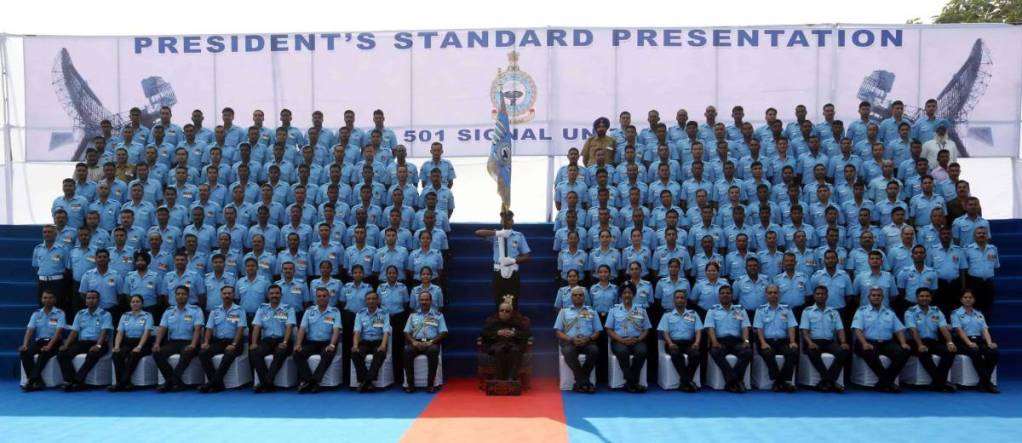
Today, the legacy of the Star Sapphire systems is integrated into the fabric of the Indian Air Force’s current capabilities. The IAF’s indigenous and international radar systems are seamlessly integrated into a sophisticated network known as the Integrated Air Command and Control System (IACCS). This system maintains a vigilant 24/7 watch over India’s skies. In its latest iteration, the IACCS utilises feeds from IAF sensors and incorporates data from numerous civilian, Army, and Naval sources. This comprehensive air defence network, vital for national security today, owes its existence to the pioneering efforts of the IAF’s intrepid engineers. Their foresight and innovations laid the groundwork for a system that epitomises self-reliance, ensuring India could maintain its aerial defence capabilities without excessive dependence on external support.
⭐ This post previously received 5.0/5 from 54 readers in our legacy system.


Leave a Reply