

The skies over erstwhile East Pakistan, a region fraught with historical complexity, witnessed the exploits of the Pakistan Air Force’s No. 14 Squadron, the “Tail Choppers.” This fighter squadron was given the lonely task of defending this territory. From the audacious strikes of 1965 to the valiant struggle of 1971, we walk the squadron’s daring deeds.
But history, like the skies they patrolled, can be a battlefield. Buckle up for a thrilling journey where we’ll witness their history through a unique lens: “Shared Histories, Differing Perspectives.” Joining me on this aerial odyssey is Usman Shabbir, co-author of the acclaimed PAF history book “Eagles of Destiny.” Prepare for a dogfight of narratives as we dissect the deeds of the No. 14 Squadron PAF from two sides of the border.
Early Years
Established in 1948, the No. 14 Squadron of the Pakistan Air Force has carved a distinguished path within the nation’s aerial defence apparatus. Initially equipped with Hawker Tempests inherited from the partition of the Indian Air Force, the squadron swiftly transitioned to the newly acquired Hawker Fury fighter-bombers.

The 1950s witnessed a period of dynamic growth for No. 14 Squadron. The unit activated airfields like Tejgaon in Dacca, showcasing its aerial prowess during prestigious air displays for dignitaries such as King Saud. It concurrently honed its combat skills through various exercises. In September 1956, No 14 Squadron moved to Mauripur and, in November, became operational on the F-86 Sabre.
Recognising East Pakistan’s strategic vulnerability, the PAF made a crucial decision in 1964. Under Squadron Leader Shabbir Hussain Syed, No. 14 Squadron, equipped with 12 F-86 Sabres, was permanently stationed at Tejgaon. This deployment transformed them into East Pakistan’s sole dedicated fighter squadron, a challenging responsibility.

As tensions escalated in the lead-up to the 1965 war, the operational environment for No. 14 Squadron became increasingly daunting. Outnumbered by a better-equipped Indian Air Force with numerous bases, the squadron faced a significant disadvantage. Compounding these limitations, Tejgaon Airfield lacked critical wartime infrastructure – inadequate dispersal areas, no protective shelters, and limited air defence weaponry. Early warning capabilities were practically non-existent, with a single outdated radar offering minimal detection effectiveness.
1965 War
On September 6th, 1965, hostilities erupted. The Indian Air Force launched pre-emptive strikes against East Pakistan the following day, targeting airfields at Chittagong, Jessore, and Kurmitola. Their aim: to lure No. 14 Squadron PAF into the open and cripple them. However, the IAF made a crucial miscalculation – The No. 14 Squadron was stationed not at these targeted bases but at Tejgaon.
Despite the surprise attack, No. 14 Squadron scrambled two F-86 Sabres in response. Tragedy struck when Flight Lieutenant ATM Aziz failed to return from this mission. His wreckage was later found, but the cause of the crash remains a mystery. This loss and the earlier bird strike reduced the squadron’s operational strength to ten aircraft.
Usman Shabbir takes the narrative here, detailing No. 14 Squadron’s daring counter-offensive against Kalaikunda airbase in India. As word of IAF strikes on numerous unused airfields reached the squadron, a worried OC Squadron Leader Shabbir telephoned the top brass requesting permission to attack the Kalaikunda air base. Assured by the squadron’s readiness and preparations in carrying out the long-distance strike, approval was granted at 0625hrs.
However, a successful counter-offensive hinged on maintaining the element of surprise. Foreseeing this need, No. 14 Squadron had been undergoing intensive training for long-range, low-level attacks. This focus proved crucial. With their F-86 Sabres modified to carry four external fuel tanks, the pilots practised flying at extended ranges, sacrificing manoeuvrability for extended reach. While not ideal for dogfights, this configuration allowed them to reach Kalaikunda undetected.
Seven minutes after receiving the green light, five F-86 Sabres, led by Squadron Leader Shabbir, roared down the runway in a tight arrowhead formation. Flying Officer Tariq Habib Khan and Flying Officer M. Afzal Khan flanked Shabbir, while Flight Lieutenants Abdul Baseer Khan and M. Abdul Haleem completed the formation. Hugging the terrain at 200-300 feet altitude, they streaked towards Kalaikunda, aiming to catch the Indian Air Force entirely off guard.
Their gamble paid off—the Indian base bustled with activity, unaware of the approaching danger. Shabbir initiated the attack, diving towards Canberras and Hunters parked on the tarmac, followed by the rest of the formation. The surprise was devastating. Multiple Indian aircraft were destroyed in the initial onslaught. During the attacks, Flight Lieutenant Haleem had spotted four Hunters flying above. Still, for some unexplained reason, they never engaged the attacking Sabres and failed to give a chase on exit. The formation recovered safely at the home base at 0744hrs. The formation claimed to have destroyed 10 Canberra and two Hunter aircraft and damaged five Canberras. However, as I point out, the actual losses reported by the IAF were two Canberras and four Vampires.

A second strike was launched later that morning, this time led by Flight Lieutenant Haleem. However, the element of surprise had vanished. Haleem, a graduate of Fighter Leaders School and bagging the Top Gun award at William Air Force Base, Arizona had joined the squadron . Haleem suggested another target, as Kalaikunda would be on alert after being struck four hours earlier . His suggestion was overruled.
The Indian Air Force, now on high alert, scrambled nine Hunters to intercept the incoming Sabres. A fierce dogfight erupted, and the sky over Kalaikunda became a whirlwind of bullets and evasive manoeuvres. Poor visibility hampered the Pakistani approach, while Indian anti-aircraft fire added to the chaos.
Meanwhile, Flight Lieutenant Tariq Habib found himself in a desperate situation. Outnumbered and burdened by a single, stubborn fuel tank that refused to detach, he displayed nerves of steel under a hail of bullets. With each passing moment, his damaged aircraft became a heavier target. Yet, Habib refused to yield. He executed a series of daring low-level manoeuvres, pushing his Sabre to its limits and somehow outmanoeuvring his pursuers. The pursuing Hunter pilot, struggling to match Habib’s manoeuvres at a low altitude, attempted a risky “split-S” manoeuvre to regain control. However, unable to recover from the high-stress manoeuvre at such a low height, the Hunter plunged towards the ground.

Habib weaved through the hostile airspace for ten agonising minutes, his survival a testament to his incredible composure and piloting expertise. Finally, defying the odds, he managed to limp his aircraft back to Dacca, a feat that earned him the prestigious Sitara-e-Jurat decoration; despite the loss of Afzal Khan, the squadron pressed on. They claimed to have destroyed three Canberras and one C-119 transport aircraft and damaged two Hunters during this second raid.
As for the IAF version of this raid, they concur on the four Sabres attacking Kalaikunda but were confronted by only two Hunters flown by Flight Lieutenant Alfred Cooke and Flying Officer SC Mamgain. Cooke provides a contrasting perspective. His account, captured on gun camera, showcases a classic dogfight with Afzal Khan, tragically ending in the latter’s demise. Cooke also engaged other Sabres, damaging one and potentially causing another to be written off later due to a lack of spare parts. He even pursued another Sabre piloted by Flight Lieutenant Tariq Habib Khan, leading to a thrilling sequence of manoeuvres before the PAF aircraft escaped. While Mamgain’s footage was inconclusive, ground reports of a second Sabre crash near the border led to his claim of a kill.

The success at Kalaikunda earned No. 14 Squadron the now-famous nickname “Tail Choppers,” a testament to their audacity and skill. Despite the political class holding back the IAF from attacking aggressively, PAF actions garnered respect from their adversaries, with the CO of 16 Squadron IAF, Pete Wilson, describing them as “highly motivated, well led and well trained.” Following the PAF raid, the IAF relocated its Canberras and Vampires from Kalaikunda to safer bases.
No. 14 Squadron continued the fight, launching attacks throughout the campaign. They targeted airfields at Barrackpore, Bagdogra, Guwahati, and the unused airstrip at Agartala. At Bagdogra, they achieved confirmed destruction of a C-119 Packet and two Vampires on the ground. However, Squadron Leader MJ Marston, who was strapped in one of the Vampires, succumbed to his burn injuries later. At Barrackpore, they claimed four aircraft – a C-119, a Canberra, and two Dakotas. However, the IAF confirmed the loss of only one C-119 and one Dakota, as no Canberra was present at the base, and the other C-119 sustained damage but was later repaired.
1971 War
Usman Shabbir paints a grim picture of No. 14 Squadron’s state between the 1965 and 1971 wars. East Pakistan’s infrastructure remained stagnant, with the second airbase at Kurmitola still a distant dream. Plans to bolster their force with a new squadron equipped with F-6 aircraft never materialised. No. 14 Squadron had traded in its nine remaining F-86F Sabres from the 1965 war for 16 F-86E models, only four of which were wired to fire Sidewinders.
The most crippling factor, however, was the political turmoil brewing in East Pakistan. Nearly half the squadron’s personnel, Bengali pilots and technicians deemed unreliable due to the simmering unrest, were grounded. This left them woefully outnumbered by the formidable Indian Air Force, with a single squadron facing twelve of theirs. Furthermore, the influx of West Pakistani pilots unfamiliar with the East Pakistani terrain significantly hampered their effectiveness.
Despite the official war starting in December 1971, No. 14 Squadron had been engaged since March, providing crucial air support for ground troops. One such exemplary mission involved supporting the capture of the Bhairab Bazar Bridge by the Special Service Group (SSG) in April. Four Sabres conducted a textbook Close Air Support (CAS) operation, providing continuous cover for the SSG assault and even firing near advancing troops. The successful mission secured the vital railway bridge believed to be guarded by up to 400 infiltrators and Indian Army troops.
They sprang into action again on November 19th, launching airstrikes against advancing Indian troops in the Jessore Sector. These sorties continued into the following day. On November 22nd, a reconnaissance aircraft spotted Indian tanks near Chaugacha. Responding swiftly, No. 14 Squadron launched an offensive. Leading a three-plane formation, Wing Commander Afzal Choudhry engaged the reported tank sighting during the squadron’s third mission that day. However, a critical error in judgment occurred following the attack. Ground control instructed the formation to search for more concealed targets, exposing them and lacking vital radar coverage.
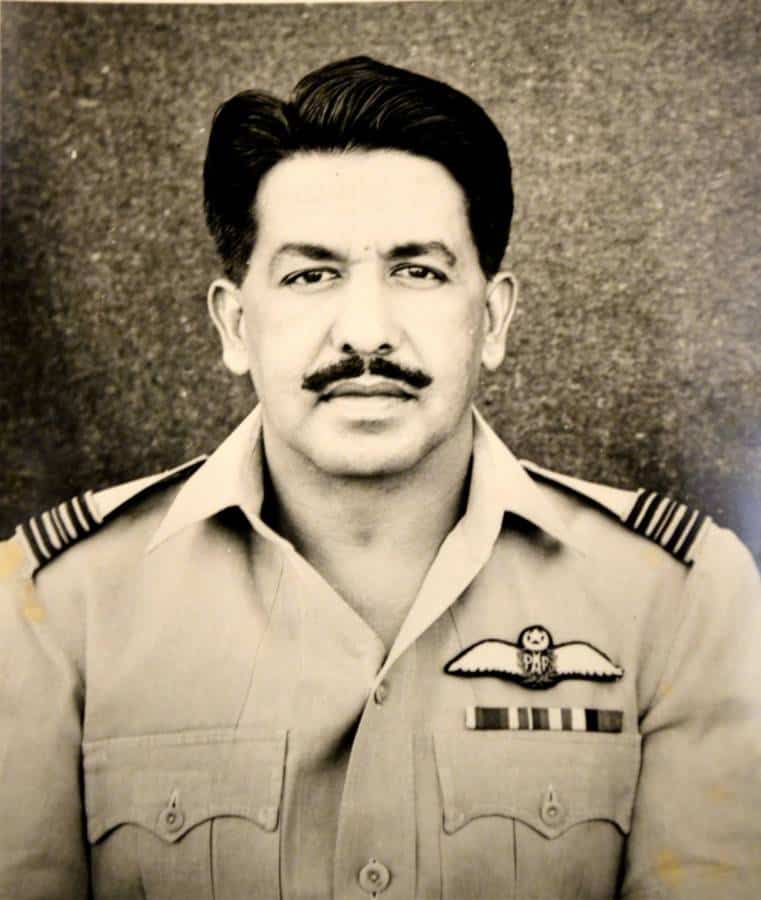
This decision proved disastrous. Four Indian Gnats scrambled from Dum Dum, catching the unsuspecting F-86 formation entirely by surprise. While Wing Commander Choudhry initially mistook them for a much larger force of ten Gnats, the reality was a more straightforward case of being caught off guard. The squadron, already disadvantaged, suffered a heavy blow. Squadron Leader Khalil Ahmad and Flight Lieutenant Parvaiz Mehdi Qureshi separated from their leader in the confusion, became easy targets and were ultimately captured as prisoners of war.
I must chime in with the Indian Air Force account that contradicts the PAF’s version of events. The IAF disputed claims of eight to ten Gnats engaging the Sabres and dismissed Pakistani assertions of shooting down two Gnats. Even Wing Commander Choudhry’s claim of downing a Gnat faced ridicule within his squadron. Analysis of his combat film revealed no evidence of an enemy aircraft.

Usman continues with the narrative – The war reached East Pakistan with a vengeance on December 4th, 1971. Wing Commander Afzal Choudhry found himself in the thick of the action. By 7:30 AM, during the third Combat Air Patrol (CAP) sortie, radar picked up a flight of Indian Hunters approaching Tejgaon airfield. Squadron Leader Javed Afzaal, alongside his wingman, made visual contact and engaged in a manoeuvring dogfight, ultimately forcing one Hunter to retreat with smoke trailing.
Tragedy struck moments later as another Hunter pilot, Flying Officer Harish Masand capitalised on the confusion and pounced on Afzaal’s wingman, Flight Lieutenant Saeed Afzal. Masand’s short burst of fire critically damaged Afzal’s F-86, forcing him to eject. Sadly, Afzal’s descent ended in the hands of insurgents who brutally lynched him.
The chaotic dance continued as three separate Indian Air Force formations, totalling 13 aircraft, converged on Tejgaon within minutes. Reconstructing the exact sequence is challenging, but it’s evident the first two formations, comprising Hunters and MiG-21 escorts, failed to deliver their attacks due to resistance from the F-86s. One Hunter targeted by Afzal belonged to the second formation and miraculously escaped riddled with bullet holes.
Wing Commander S.M. Ahmed, visiting No. 14 Squadron to boost morale, impulsively joined the fight with a young wingman. Taking off around 7:45 AM, they were directed towards an incoming strike targeting Kurmitola airfield. Unfortunately, Ahmed’s F-86 was intercepted by the IAF’s Squadron Commander N. Chatrath, leading to a brief dogfight. Ahmed managed to disengage but was pursued back to Tejgaon, where the persistent Hunter pilot delivered the final blow. Like Afzal, Ahmed ejected but met a similar fate upon landing.
A glimmer of hope emerged when Flight Lieutenants Iqbal Zaidi and Ata-ur-Rahman almost got a Hunter but were warned by ground control frantic warning about trailing Hunters. Ata executed a sharp manoeuvre, narrowly dodging a barrage of tracers; they unsuccessfully tried to chase the Hunter. Meanwhile, Flight Officers Shams-ul-Haq and Shamshad Ahmad, eager young pilots, were itching for a fight. Radar vectored them towards a pair of intruding Su-7s. The surprise came when the Su-7s abruptly split and executed a sharp turn while still laden with ordnance. Despite Shams’ pursuit, the Su-7s ultimately outran his F-86 and escaped at low altitude, though Shams claimed a possible kill.
The brief respite was shattered as radar reported four approaching Hunters. Shams opted for a split attack, outnumbered, each F-86 engaging a pair of Hunters. Fortunately, one of the Hunters inexplicably broke away, leaving Shams in a one-on-one fight. He skilfully manoeuvred behind the remaining Hunter and unleashed a volley of gunfire, sending it down in flames. The pilot ejected safely.
Relieved to spot Shamshad also engaging a Hunter, Shams soon had another bogey on his radar. This Hunter, likely alerted by the others, opted for a hasty retreat. With his ammunition depleted, Shams boldly decided to employ a Sidewinder missile, achieving a confirmed kill with the pilot ejecting. Exhausted but determined, Shams instructed his wingman to land first. As he prepared for his landing, a final surprise awaited. Radar warned of two intruders. Forced into action again, Shams engaged a MiG-21, causing it to overshoot but ultimately escaping.
In mere minutes, these rookie pilots had weathered a relentless onslaught from eight enemy aircraft. Their resilience and skill ensured their survival and yielded potential victories against multiple attackers. Shams, in particular, emerged as a hero, claiming one confirmed kill and a probable second with a daring Sidewinder launch.
The following hours saw a relentless dance between the PAF and IAF. Flight Lieutenants Schames-ul-Haq and Flying Officer Mahmud Gul engaged Hunters attacking Tejgaon. Schames, utilising the F-86’s manoeuvrability, gained the upper hand and shot down a Hunter, tragically witnessed by those on the ground. A lull ensued until the afternoon, followed by another successful engagement for Squadron Leader Dilawar Hussain. He spotted and shot down a Hunter. Unfortunately, Sajjad’s aircraft was soon rocked by cannon fire. The devastating 30mm cannons of the Hunters had proven deadly throughout the day, and Sajjad was fortunate to escape with an ejection.
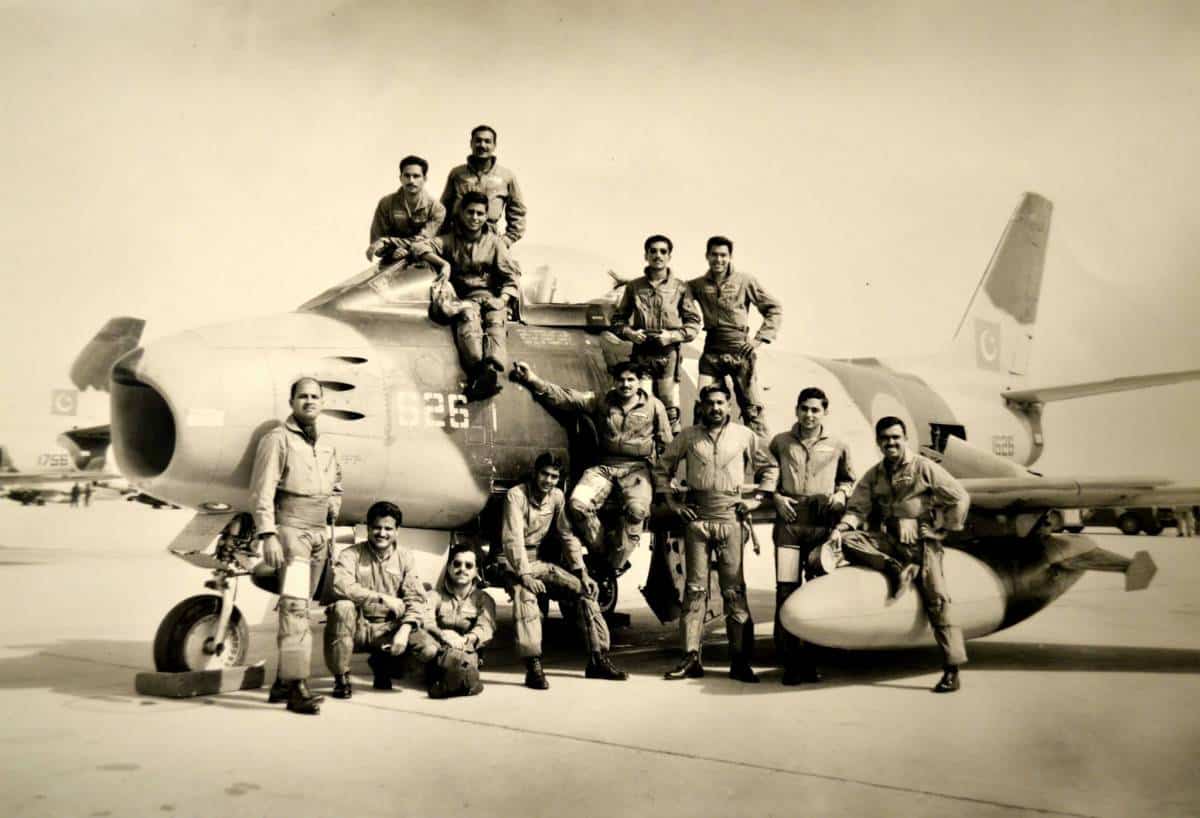
A desperate struggle for air superiority marked the following days. While PAF pilots, aided by anti-aircraft batteries, claimed several kills, the IAF focused on crippling Tejgaon’s runway. By December 7th, repeated bombing runs rendered it unusable, effectively grounding the remaining PAF Sabres. Squadron Leader Dilawar’s grim statement, “The fate of East Pakistan has been decided,” captured the despair that settled upon the squadron.
With dwindling resources and the inevitable surrender looming, key personnel evacuated on December 9th. The war’s end saw only 11 operational F-86s remaining, a stark reminder of the immense disparity in strength.
Despite the ultimate fall of East Pakistan, the No. 14 Squadron deserves recognition for their determined fight. They inflicted significant losses on the IAF, with combined PAF and anti-aircraft efforts destroying nearly three times as many Indian aircraft as their losses.
There are differing views on my side of the border. The lone PAF squadron in East Pakistan faced a unique situation in the history of the India-Pakistan wars. They adopted a cautious strategy, engaging only when pilots felt they had an advantage. This forced the IAF to abandon many attacks. However, the PAF primarily relied on anti-aircraft guns to defend the Dacca airfield, hindering their ability to support ground troops or launch counter-offensives. Pakistani claims of shooting down nine Indian aircraft on the first day were inflated; only two were confirmed losses to PAF action (K.D. Mehra and Kenneth Tremenhere). Three others were attributed to ground fire.
The IAF lost 18 aircraft in the eastern theatre during the war. Twelve were combat-related (eight Hunters, two MiG-21s, a Sukhoi-7, and a Canberra), and the remaining six losses (four Hunters, a Mi-4, and a Dakota) were non-combat incidents. Strikes on Dacca accounted for over half the IAF’s combat losses, with five aircraft lost on the first day and three more later, primarily to anti-aircraft fire.

The limited range of most IAF aircraft restricted operations. Only Hunters had sufficient range for air combat over Dacca. MiG-21s were hampered by range and a lack of guns, while Sukhoi-7s weren’t designed for air-to-air combat. The IAF claimed five Sabres were shot down in the air (Chatrath, Masand, Neb, Sukrut Raj, and Sundaresan) and three destroyed on the ground, but only three air-to-air victories could be confirmed.
While the IAF successfully neutralised the PAF threat from Dacca airspace, their initial goal of eliminating PAF presence remained unachieved. This limited success is credited to No. 14 Squadron PAF’s defensive strategy.
Post 1971 War
In the aftermath of 1971, No. 14 Squadron PAF underwent restructuring. In July 1972, they reemerged at Sargodha under Wing Commander Muhammad Afzal Chaudhry, equipped with F-6 aircraft.
A shift came in April 1973 under Wing Commander J.A. Carrapiett. The squadron transitioned into an Operational Conversion Unit (OCU), embarking on a new chapter dedicated to training the next generation of PAF pilots. Relocating to Mianwali’s training base, the squadron further bolstered its capabilities by adding FT-6 trainer aircraft from China in May 1977.
Their service was acknowledged in November 1976 when General Muhammad Sharif, Chairman of the Joint Chiefs of Staff Committee, presented the squadron with its colours. These colours proudly displayed the battle honours of “Kalaikunda 1965” and “Dacca 1971,” a constant reminder of their past heroism.
The year 1986 marked a significant leap forward. No. 14 Squadron transitioned to the multi-role F-16 aircraft, significantly enhancing its combat capabilities. It relocated to Kamra (later renamed Minhas) after reforming under Wing Commander Sheikh Amjad Javed.

The Afghan War provided the perfect platform for No. 14 Squadron to showcase its F-16 prowess. Living up to its “Tail Choppers” moniker, it actively participated in combat air patrols along the western borders. Its vigilance paid off, claiming five aerial victories against Afghan aircraft.
No. 14 Squadron’s adaptability continued in 1993 with its transition to the F-7P aircraft. The squadron celebrated its Golden Jubilee in November 1998 with a parade reviewed by Air Vice Marshal (Retd.) M. Khyber Khan, their first Squadron Commander. In recent years, they have incorporated the advanced JF-17 fighter aircraft into their fleet, ensuring they remain vital to Pakistan’s air defence.

Usman and I chose 14 squadron PAF’s brave stand against the overwhelming force of the IAF. The idea is not to ascertain which side’s narrative is correct. Instead, we endeavour to celebrate a brave young bunch of aviators while highlighting that historical narratives need continuous polishing. We hope you like our attempt to lay all the cards on the table.


Leave a Reply