

It is widely known that the oldest unit in the Indian Air Force is No. 1 Squadron, formed on 1 April 1933. However, a fascinating and lesser-known story exists of an even older lineage within the IAF—a flying unit whose ancestry predates No. 1 Squadron. This story takes us back to the early 20th century, the pioneering days of military aviation and the advent of “communication” flights.
The Genesis of Communication Flights
In 1913, the British Forces Post Office underwent reorganisation, with the Royal Engineers assuming partial responsibility for military mail transport. By the end of World War I, the RAF partnered with the Postal Section of the Royal Engineers to pioneer international airmail services. These efforts, driven by necessity, laid the foundation for “communication” flights, enabling fast and efficient movement of people and documents. Such flights became indispensable in wartime, facilitating the transport of high-ranking officials, soldiers, and critical dispatches.
The earliest such unit was No. 2 Aircraft Acceptance Park Flight, formed in 1917 at Hendon. On 23 July 1918, it was redesignated The Communication Squadron, and just three days later, on 26 July 1918, it became No. 1 Communication Squadron, RAF. Major Cyril Patterson led the squadron operated from Hendon, with a detachment at Buc near Paris. This marked a significant milestone in the evolution of military aviation, setting the stage for the modern concept of logistical and executive air support.
By December 1918, No. 1 Communication Squadron was fully operational, supporting the Paris Peace Conference at Versailles. At the same time, the 86th Communications Wing, RAF, was established under Lt. Colonel W.H. Primrose, DFC, for similar missions. Its fleet included converted de Havilland DH4 aircraft, retrofitted with hinged coupé covers, plywood sides, and opening windows. Later, these aircraft were replaced by three twin-engine Handley Page 0/400 bombers—Silver Queen, Silver Star, and Great Britain—rechristened as HM Air Liners. These planes provided rapid transport for government officials and delivered mail to post-war European peacekeeping forces.
Passengers endured loud engine noise and relentless vibrations, but these flights represented the cutting edge of early aviation. Silver Star (D8326) made history as the first aircraft to carry non-military personnel across the English Channel on 13 December 1918 and later completed the first passenger-carrying night flight between Britain and mainland Europe. From January to September 1919, No. 1 Communication Squadron operated the first regular air service between London (Hendon) and Paris (Le Bourget), enabling crucial diplomatic engagements during the Treaty of Versailles negotiations. The enactment of the Air Navigation Act on 1 May 1919 officially marked the beginning of civil aviation in Britain, though No. 1 Communication Squadron had already paved the way.
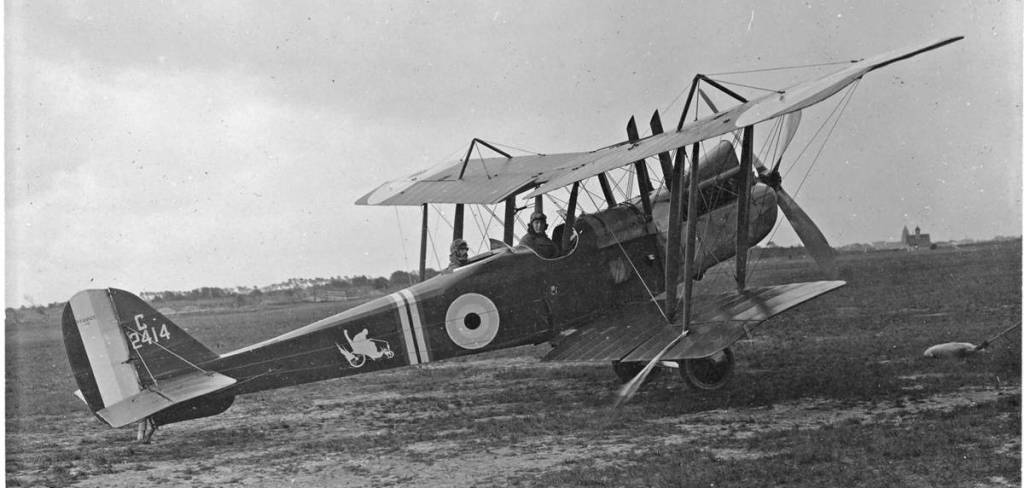
Interestingly, the squadron adopted a unique emblem: a silhouette of an old man in a “flying” wheelchair, symbolising its role in transporting senior political and military leaders—affectionately referred to as the “old men at HQ.”
The Humble Beginnings of Communication Flights in India
India’s association with communication units began in 1928. On 16 October 1928, the HQ RAF India Communication Flight was formed at the Air Park in Lahore with the Valentia aircraft. The unit operated from Lahore during the summer and Willingdon (now New Delhi) in the winter. Though disbanded in 1931, it was reformed later that year at Willingdon, continuing its seasonal alternation between the two locations. In August 1940, it was renamed the AHQ India Communication Flight, which remained operational until January 1942, when its responsibilities were transferred to No. 31 Squadron, RAF.

On 8 June 1942, the unit re-emerged as the AHQ India Communication Unit at Willingdon. It later moved to Palam and disbanded into the ACSEA Communication Squadron on 30 September 1944. However, it was again reformed on 1 March 1946 as the BAFSEA Communication Squadron at Willingdon, relocating to Palam in May 1946. As the scale of operations grew, the unit was expanded from a flight to a squadron on 1 April 1946, coinciding with the reorganisation of Air Headquarters in preparation for India’s impending independence.

Despite its growth, the squadron operated without an authorised establishment, relying on co-located units for resources. This situation persisted until November 1946, when its establishment was finally authorised, with administrative control under No. 3 (Indian) Group and functional control with Air Headquarters (India).
Following India’s independence on 15 August 1947, the unit was redesignated as the Supreme Commander’s HQ (Air) Communication Squadron. However, its true transformation occurred on 1 November 1947, when Squadron Leader Melville Duarte (1772) assumed command and established the Air Headquarters Communication Squadron (RIAF). For the first time, the unit was an Indian Air Force squadron with an Indian Commanding Officer, an all-Indian crew, and Indian Air Force-owned aircraft.

The squadron was initially equipped with Airspeed Oxfords, the first aircraft of the Air Headquarters Communication Squadron in independent India. Four Harvards were soon supplemented for short-haul missions. Therefore, the Air Headquarters Communication Squadron is the IAF’s flying unit with the oldest ancestry, tracing its roots back to 1928.
Communication Flights in British India
Communication flights were integral to military aviation, providing essential logistical support for higher-level organisations in the RAF. From Wings to Groups and beyond, every level maintained its communication unit. This might be a single aircraft at the Wing level, but larger organisations often operate full-fledged flights. India mirrored this pattern, with a multitude of communication flights emerging post-1940 to support the country’s growing military infrastructure during and after World War II.

Among the key communication units of the time was the Bengal Communication Flight, formed on 2 June 1942 at Dum Dum and tasked with supporting the Bengal Command Headquarters. Over the next few years, this unit underwent several transformations. It was renamed the Bengal Communication Flight on 1 December 1942 and relocated to Barrackpore on 11 February 1943. Shortly after that, on 24 March, it became the AHQ Bengal Communication Unit, absorbing the communication squadrons of Nos. 221 and 224 Groups. The unit returned to Dum Dum on 12 June before moving to Comilla on 31 October, where it was redesignated the 3rd Tactical Air Force (Burma) Communication Squadron on 19 December 1943. Later, the RAF Bengal/Burma Communication Squadron emerged from the 3rd TAF Communications Squadron on 4 December 1944 at Baigachi. This unit, too, underwent several changes, becoming the RAF Burma Communication Squadron on 21 April 1945 and the AHQ Burma Communication Squadron on 20 September 1945. Reduced to flight status on 14 November 1945, it operated from Mingaladon with detachments in Meiktila, Toungoo, Moulmein, Saigon, and Bangkok until it disbanded on 1 December 1947.
The No. 1 (Indian) Group Communication Flight was another key unit, evolving from the No. 223 Group Communication Flight on 15 August 1945 at Peshawar. It moved to Chaklala on 2 December 1945, returned to Peshawar by 10 January 1946, and was later redesignated the AHQ Pakistan Communication Flight on 15 August 1947, coinciding with India’s partition.

Similarly, the No. 225 Group Communication Flight was formed on 1 July 1942 at Jakkur, Bangalore, and moved to Yelahanka on 10 January 1944. On 1 May 1946, it was redesignated as the No. 2 (Indian) Group Communication Flight and shifted to Hindustan Airport, Bangalore, on 1 June 1947. It was then renamed No. 2 (Training) Group Flight after independence and became HQ Training Command Communication Flight on 26 January 1950. It moved back to Yelahanka in June 1964, where it remains operational today, making it one of the IAF’s longest-serving units.
The No. 3 (Indian) Group Communication Flight was formed from the No. 228 Group Communication Flight on 1 May 1946 at Barrackpore but was short-lived, disbanding on 31 May 1947. Similarly, the No. 4 (Indian) Group Communication Flight originated from the No. 227 Group Communication Flight on 1 May 1946 at Agra and disbanded on 15 July 1948.
At the time of India’s independence in 1947, only two communication units remained operational: the Air Headquarters Communication Squadron at Palam, which carried the legacy of India’s oldest flying unit, and the No. 2 (Training) Group Flight at Yelahanka. These units continued to serve as critical logistical lifelines for the fledgling Indian Air Force.

Communication Flights in Post-Independence India
Post-independence, communication flights in the Indian Air Force evolved significantly to cater to the operational and logistical demands of a growing and dynamic air force. These units have been entrusted with various critical responsibilities, from flying VIPs, foreign dignitaries, and senior military officers to providing vital assistance during natural disasters and national emergencies. In wartime, they play a pivotal role in mobilising manpower, transporting equipment, and maintaining essential logistical continuity.
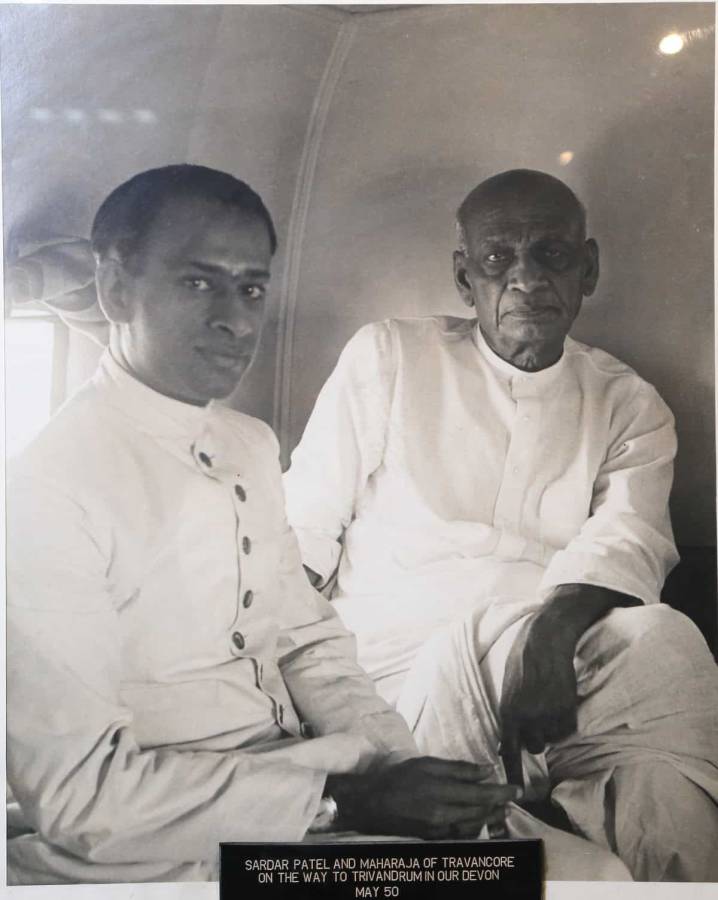
Each IAF communication unit is also responsible for supporting its corresponding Indian Army and Navy Commands. The AHQ Communication Squadron holds additional responsibilities, flying the three Service Chiefs, the Chief of Defence Staff (CDS), and the President, Vice President, and Prime Minister of India. During international engagements, it also caters to cabinet ministers, such as the External Affairs Minister.

The 103 Communication Flight was established in 1954 at Jorhat with three aircraft. Its primary role was to provide communication support to the Governors of Eastern States, which later expanded to include the AOC-in-C of Eastern Air Command (EAC) and senior Army officers. Notably, on 16 December 1971, the unit’s aircraft carried Indian military commanders to the surrender ceremony at Dacca. After the war, the Government of India presented one of the unit’s Dakotas to Bangladesh, making it the first aircraft in the Bangladesh Air Force. Renamed the EAC Communication Flight on 3 June 1972, the President honoured the unit with the IAF Ensign on 17 August 1979. Though it was numberplated in 1997, elements of the flight, including Avros and Chetaks, continued their duties through other units. It is believed that the unit has been recently resurrected.

The HQ Maintenance Command Communication Flight (MCCF) was formed on 11 June 1964 at Kanpur as part of the SAASO branch of HQ Maintenance Command. Initially equipped with Avro, Devon, and Dakota aircraft, the unit shifted to Nagpur in 1969 along with HQ Maintenance Command. It gained independent status on 24 August 1984 and continues to operate under HQ Maintenance Command at Sonegaon Airport, Nagpur.

The HQ CAC Communication Flight originated as a detachment of No. 11 Squadron at Bakshi Ka Talab, operating a modified Dakota for VIP duties. It moved to Bamrauli in July 1969, where it was allotted an Avro. On 1 November 1981, it became an independent unit, tasked primarily with communication duties for HQ Central Air Command.
Similarly, the SWAC Communication Flight was established as the No. 1 Group Communication Flight when No. 1 Group was formed at Jodhpur in 1972. Equipped initially with Dakotas, followed by Avros and briefly Dorniers, the unit provided communication support for HQ South Western Air Command. Meanwhile, the SAC Communication Flight was set up in April 1985 with Avros to serve HQ Southern Air Command.

Curiously, Western Air Command (WAC), the largest and arguably most operationally significant IAF command, lacks a dedicated communication flight today. However, this wasn’t always the case. Tracing its origins to the No. 1 (Indian) Group at Peshawar, WAC originally had its communication flight. However, during the partition of India in 1947, No. 1 (Indian) Group was allocated to Pakistan, along with its communication flight, which was redesignated as the AHQ Pakistan Communication Flight on 15 August 1947.
The IAF resurrected No. 1 (Indian) Group in November 1947, eventually evolving into the Operational Command and Western Air Command. In the 1950s, there are records of the Operational Command operating its communication flight. The IAF’s first Ashoka Chakra awardee, Squadron Leader Suhas Biswas, served with this unit. However, based at Palam, this communication flight was disbanded at some point, and the Air Headquarters Communication Squadron absorbed its responsibilities. This consolidation left WAC without its dedicated communication unit.
Today, the Indian Air Force maintains seven active communication units, upholding a legacy that traces back to the very inception of military aviation. These units continue to bridge the past and the present, embodying the vital role of communication flights in the IAF’s operational framework.
⭐ This post previously received 5.0/5 from 31 readers in our legacy system.


Leave a Reply