
While Group Captain Sir Douglas Bader became a legendary RAF ace with 22 aerial kills, his legacy is most defined by his return to combat flying after losing both legs in 1931. India’s own Douglas Bader was born 32 years later, in 1963.
On April 15, 1989, what began as a routine sortie over the skies of Kalaikunda became a life-or-death battle for Lieutenant Uday Sondhi, a 27-year-old Naval fighter pilot attached to the Indian Air Force’s No. 2 Squadron. That day, Lt. Sondhi was flying as No. 2 in a tactical formation. Everything proceeded smoothly until he began his final approach. As the aircraft rolled into the last turn, disaster struck—the control column jammed, leaving Sondhi unable to level out.
In an extraordinary display of composure and quick thinking, Sondhi immediately activated the servodyne dump valve and opened the throttle, struggling for control with mere seconds to react. He managed to regain limited control, but the aircraft continued to descend. Faced with the horrifying reality that a populated village was directly in his flight path, Sondhi made a split-second, heroic decision. Refusing to eject and fully aware of the risk to his own life, he stayed with the aircraft, using the little control he had to steer away from the village. His Ajeet crashed into an open, unpopulated area, sparing countless lives on the ground.

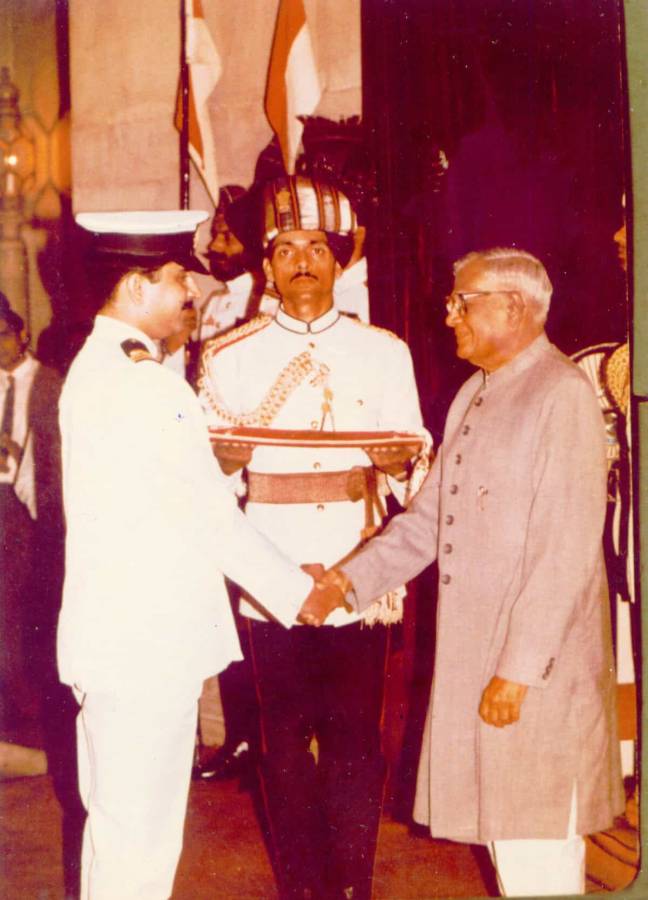
The impact was brutal, and the aircraft erupted into flames. Trapped inside, with his left ankle jammed in the wreckage and his flying suit ablaze, Lt. Sondhi’s ordeal was far from over. Yet even as the fire consumed the cockpit, he remained remarkably calm. When civilians arrived at the crash site, Sondhi, despite excruciating pain, instructed them on how to help. Showing unimaginable resilience, he freed his ankle and guided the villagers as they pulled him from the burning wreckage. In recognition of their bravery, Sondhi and the two villagers who came to his aid were awarded the Shaurya Chakra.
However, Sondhi had sustained devastating injuries—a compound comminuted fracture of his left ankle and burns covering 40% of his body, mostly on the left side. But the worst was yet to come. On April 23, 1989, doctors made the agonising decision to amputate his left leg below the knee. For most pilots, this would have been the end of their flying careers. But not for Lt. Uday Sondhi. His story was far from over.
Desire to get back to Flying
Lt. Uday Sondhi’s recovery was gruelling, yet his resolve to return to the cockpit never wavered. “The doctors had given up on me,” he recalls. “But I knew I wasn’t going to give up.”
He underwent seven skin graft surgeries. Each day, his dressings had to be painstakingly changed, a process so excruciating that four people were needed to hold him down while a thick roll of gauze was thrust between his teeth. As doctors gently peeled the dressing away from his burnt flesh, his body would convulse in pain for 15 minutes afterwards. His body temperature hovered so high that the room he stayed in had to be cooled by four air conditioners to keep him stable. His recovery was long and agonising, but his spirit remained unbroken.
By September 1989, Sondhi was fitted with a below-knee prosthesis at the Artificial Limb Centre in Pune. His passion for flying still burned strong, and he embarked on an uncharted journey—one no fighter pilot had ever attempted—to regain his flying status. When he approached his station seniors at Kalikunda, asking for permission to fly again, they were initially baffled, then confused. But eventually, they were awestruck by the young officer’s fierce determination to continue flying despite losing his leg.
In July 1990, after months of intense rehabilitation, he was referred to the Indian Air Force’s Department of Human Engineering at the Institute of Aerospace Medicine for a groundbreaking aeromedical evaluation. The question was simple: could a pilot with a prosthetic limb return to active flying duties in a high-performance aircraft? The answer lay in the rigorous and comprehensive testing that lay ahead.
Historically, the Indian Air Force had cleared aircrew members with disabilities but under restricted conditions. In 1968, two airmen—one with an above-knee amputation and the other with a below-knee amputation—had been allowed to fly again, though both were navigators on transport aircraft. Additionally, there was the case of a senior pilot who had survived severe burns covering 70% of his body and a partial finger amputation. Following a rigorous evaluation, he was cleared to fly helicopters.
But Lt. Sondhi’s case was different. He wasn’t a navigator; he was a fighter pilot. And no pilot with a below-knee amputation had ever undergone this level of aeromedical scrutiny to return to the cockpit. His resilience, paired with advancements in prosthetic technology and the latest aeromedical evaluation techniques, made him a trailblazer in aviation history—a moment reminiscent of the famed Carl Maxie Brashear, immortalised in Men of Honor.

Getting past evaluation for Below Knee Amputation
Lt. Sondhi’s recovery underwent a meticulous evaluation, beginning with an extensive assessment of his physical fitness and how well he functioned with his new prosthetic limb. By this stage, he had reached a state of what doctors called “surgical finality”—his condition had stabilised, and no further surgeries were needed. Physically, his build and posture were normal, and though his gait was slightly altered, he walked confidently and nearly usually with the prosthesis. The amputation had left him with a 20 cm stump below the knee, but there were no phantom pains, and the prosthetic limb fit securely, fastened with a leather strap and press-button attachment. Impressively, Lt. Sondhi could put on and remove the prosthesis within 20-30 seconds without any help—showcasing his adaptability and mastery of the artificial limb.

Though he had lost all movement in his left ankle, the rest of his lower limb’s range of motion remained unrestricted. He could walk briskly, jog, climb stairs, and even jump on the spot. However, when jumping from heights of 8-10 feet, there was slight hesitation—a valid concern for someone with his condition, especially in scenarios involving parachute landings.
Detailed radiological exams were performed to ensure his full musculoskeletal health, particularly after the crash. While there had been no prior X-rays of his spine, this evaluation revealed some compression fractures in his vertebrae, along with a condition called unilateral sacralisation. Despite these findings, the fractures were stable and posed no barrier to flying fighter jets. An anthropometric assessment of his body dimensions, conducted while he wore the prosthesis, showed that his measurements were symmetrical on both sides, falling within the acceptable range for flight operations.
Lt. Sondhi was then put through rigorous cockpit simulations to evaluate his ability to control an aircraft. His ability to generate and sustain rudder pedal pressure was key to the assessment. While his right leg could apply up to 100 kg of pressure, his prosthetic-fitted left leg could generate 70 kg—deemed adequate for basic flight functions. However, due to the loss of ankle movement, he could not apply left-toe brakes, a critical consideration in determining his suitability for different aircraft types.
In emergency egress trials, his swimming ability was tested in a survival pool, simulating a sea rescue scenario. Lt. Sondhi showcased strong swimming capabilities, even without his prosthetic limb, and performed well in boarding a survival dinghy. His performance in these emergency drills was deemed more than satisfactory, reinforcing his readiness for future flying duties.
Evaluation for Burns
In addition to his amputation, Lt. Sondhi had suffered severe burns covering 40% of his body. These burns were concentrated on his left upper limb, the left side of his chest, his left gluteal region, and parts of his right thigh and knee.
By the time of his aeromedical evaluation, the scars had healed well. Although visible, they did not restrict his mobility, especially in the critical areas like his upper limbs, where complete and free movement was crucial. Some of the scars had thickened, but there were no signs of keloid formation, which can cause complications in healing. Sensation in the affected areas remained intact, and he showed no photosensitivity. While the scars did not affect his physical capabilities, he was advised to keep them covered for cosmetic reasons. His chest expansion, essential for lung function in high-G environments, was completely normal.
Lt. Sondhi’s ability to handle the physical rigours of cockpit operations was reassessed, and special attention was paid to how the burn scars might impact his comfort. He had no difficulty strapping in and unstrapping himself, with no signs of tenderness or pressure points that could interfere with flying duties.
Given the extent of his burns, his body’s response to heat stress was another critical area of evaluation. By damaging sweat glands, burns can sometimes impair the body’s ability to regulate temperature. To assess this, Lt. Sondhi underwent a Hot Cockpit test, simulating flight conditions with a temperature of 40°C and 50% humidity for 40 minutes. His Heat Accumulation Index, heart rate, and sweating response were all within normal limits. Despite the significant burns, his ability to tolerate heat was unimpaired, and he experienced no discomfort in the amputated stump during the test.
Psychologically, Lt. Sondhi demonstrated the resilience and mental strength needed for aviation. His determination to return to flying remained unwavering. An extrovert by nature, he showed no signs of psychological distress from his injuries and remained sharply focused on his goal of getting back into the cockpit, a crucial factor in his overall assessment of his fitness to fly.
Aircraft Cockpit Trials
After completing the initial ground evaluations, Lt. Sondhi moved on to the most critical stage—aircraft cockpit trials. These trials, conducted alongside seasoned test pilots at the Aircraft System Testing Establishment (ASTE), would determine his future in the cockpit.
The first test involved entry and exit from a Jaguar fighter aircraft. While he could enter the cockpit, his movements were noticeably slow. More concerning, his prosthetic limb often got caught on the coaming of the instrument panel during exit, making a quick egress difficult. The absence of ankle movement meant that Lt. Sondhi could not apply the left toe brakes, which is crucial for operating a fighter aircraft. His reduced ankle flexibility also raised significant safety concerns, particularly in scenarios requiring a parachute landing or ejection. The risk of his prosthesis being dislodged during a high-speed ejection was deemed too high. Consequently, Lt. Sondhi was declared permanently unfit for the fighter stream.
Next, he was tested in an Avro transport aircraft. His ability to climb the ladder into the cockpit was slow but manageable. Since he had limited sensation in his left foot, he had to rely heavily on visual cues. Once seated in the pilot and co-pilot positions, he displayed reasonable control, but, like in the Jaguar, his inability to apply the left-toe brakes ultimately made him unsuitable for the transport fleet as well.
The evaluation took a promising turn when Lt. Sondhi was tested in Chetak and Mi-8 helicopters. His entry and exit from these helicopters were smooth, and he could quickly jump out of the Mi-8’s hatch when required. Despite his burn scars, which had thickened, they did not interfere with his ability to manage the controls.
As a result, it was recommended that Lt. Sondhi be cleared to fly Chetak and Mi-8 helicopters.

In Flight Trials
After being deemed compatible with Chetak and Mi-8 helicopters, Lt. Sondhi underwent inflight trials conducted byTest Pilots alongside an Aviation Medicine Specialist. Six sorties were flown on the Chetak and one on the Mi-8, each designed to assess his fitness to operate the aircraft rigorously.
The results were promising—his control inputs were smooth, and his reactions to helicopter manoeuvres, which didn’t require toe brake application, were satisfactory. Most importantly, Lt. Sondhi demonstrated exceptional command over the helicopter’s rudder pedals, even with his prosthetic leg. He could apply full rudder pressure with both feet in blindfolded trials, showing complete proficiency.
Conclusion
Cleared to fly rotary-wing aircraft, specifically Chetak and Mi-8 helicopters, under the restricted medical category (A3G3), Lt. Uday Sondhi was posted to the Helicopter Training School in Cochin in October 1990. There, he began a new chapter in his career, transitioning to a naval helicopter pilot and proving that determination and skill could transcend physical limitations.
Lt. Sondhi’s story is not just a personal triumph; it challenges the traditional boundaries of aeromedical policy and highlights the growing potential to integrate pilots with physical disabilities into modern air forces. His journey reflects an evolving mindset within the medical and military communities, where reevaluating standards to accommodate individuals like him is increasingly possible.
His resilience, dedication, and unwavering passion for flying are a powerful testament to the human spirit. Despite his physical and psychological challenges, Lt. Sondhi’s return to the cockpit redefined what is possible in aeromedical rehabilitation, setting an inspiring precedent for future generations.
Lt. Sondhi retired as a Captain from the Indian Navy a few years ago, flying 1,952 hours with the artificial limb. On that fateful day in 1989, his wingman was my father, who was then the flight commander of No. 2 Squadron, IAF. Sondhi was a frequent visitor to our home, and though I saw less of him as time passed, my parents maintained their connection with him.

In a fitting tribute to his remarkable resilience, the Indian Air Force recently named a rehabilitation room for children with special needs after Uday Sondhi—a lasting honour for a man who defied the odds and whose story continues to inspire generations.
⭐ This post previously received 4.7/5 from 147 readers in our legacy system.


Leave a Reply