

We bid farewell to a true hero of the skies. Air Marshal Ranjit Singh Bedi AVSM, VM, slipped the surly bonds of the earth at the age of 89 following a short illness. Ranji stood apart in a world often dominated by bluster and bravado – a paragon of calm and dignity. Those who knew him to speak of a gentleman in the truest sense, his demeanour a soothing balm in the often turbulent realm of military service. Ranji’s life was a masterclass in leadership through kindness. His poise under pressure, boundless generosity of spirit, and rock-solid moral compass earned him respect and genuine affection from all walks of life.

Early Years
Ranji, born into a devout Sikh family in Naushera, started his defence journey at the National Defence Academy (then Joint Services Wing) as part of the 9th course. His dedication to his craft was evident from the start. He progressed through the 68th Pilot Course and was commissioned in April 1956.
Selected for the fighter stream, Ranji first sharpened his skills on de Havilland Vampire at Hakimpet and was selected for his first operational assignment with 1 Squadron . This experience proved invaluable when, in February 1957, he became part of the newly formed 27 Squadron, born from the lineage of 1 Squadron. Ranji’s abilities did not go unnoticed, and by 1959, he was handpicked to fly the cutting-edge Hawker Hunter. This assignment took him to No. 7 Squadron at Ambala, where he would further refine his skills on one of the most capable fighter aircraft of its time.

Ranji’s true brilliance came to the fore with 7 Squadron, where he, under the guidance of Squadron Leader Bharat Singh, played a pivotal role in establishing the IAF’s first nine-aircraft formation aerobatics team. This groundbreaking initiative required supreme flying skills, a deep understanding of teamwork, precision, and the psychology of display flying. Ranji’s contributions to this initiative set the stage for future IAF demonstration teams, including the renowned SuryaKiran aerobatic team.

Ranji’s pursuit of excellence led him to the Pilot Attack Instructor Course, the 1960s equivalent of today’s “Top Gun” schools. This intense training honed his skills in aerial combat tactics, weapons delivery, and the art of instructing fellow pilots. The knowledge he gained would prove invaluable in the years to come as he shaped the abilities of countless IAF pilots.
Ranji’s relationship with No. 27 Squadron became the stuff of IAF legend. Over three separate postings, he continually returned to this unit, each time in a more senior role. The Hawker Hunter, a swept-wing transonic fighter, became his aircraft of choice during this period. Ranji’s mastery of this versatile platform allowed him to push the Hunter to its limits in air-to-air and ground attack roles.

His time with 27 Squadron was punctuated with other pivotal assignments. A tenure as the Alpha Squadron Division Officer at the National Defence Academy allowed Ranji to not only shape the next generation of Indian military leaders but also instil in them the values of discipline and dedication. This period coincided with the joyous arrival of his eldest daughter, adding a new dimension to his life as both a warrior and a family man. The Indo-Pakistani War 1965 saw him flying armed combat patrols over Hindon with 20 Squadron.

Leadership in the Cockpit
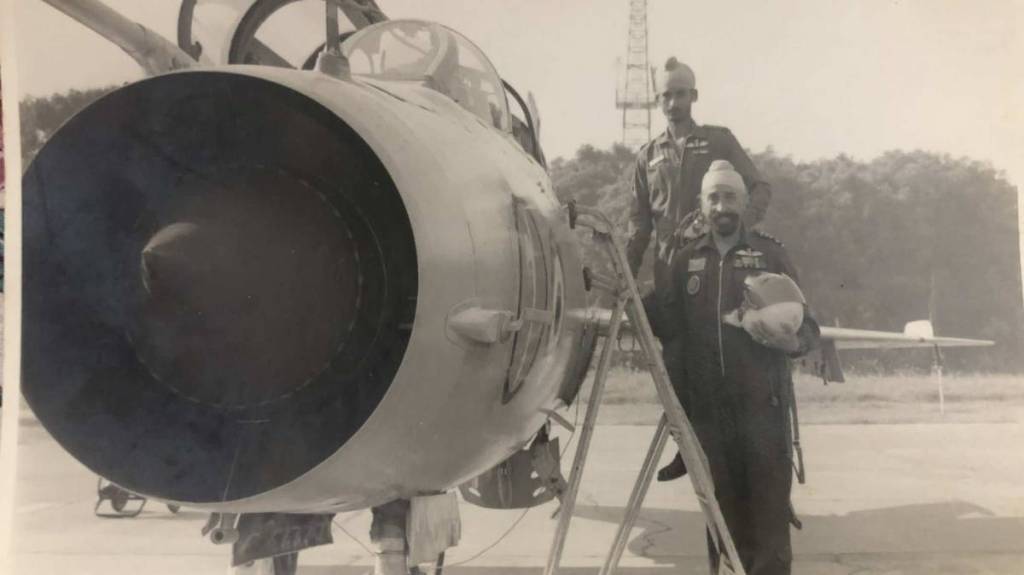
In November 1966, Ranji’s career took a significant turn as he embraced the cutting-edge MiG-21. This supersonic interceptor, a quantum leap in technology and capability for the IAF, symbolised the IAF’s commitment to staying at the forefront of aviation technology. With his characteristic dedication, he immersed himself in mastering this new machine. His exceptional skills and instructional abilities led to his appointment as Flight Commander with 45 Squadron – the sole unit entrusted with converting pilots to the MiG-21 platform.
For nearly five years, Ranji’s influence touched every MiG-21 pilot in the Indian Air Force. His exacting standards and patient guidance shaped a new generation of fighter pilots, equipping them to handle the demands of supersonic flight and split-second decision-making. It was often said, with no small measure of pride, that every MiG-21 pilot in the IAF during the 1966-71 period bore the stamp of Ranji.

Ranji’s exceptional airmanship was put to the ultimate test during the Republic Day flypast of 1970. What should have been a moment of national pride turned into a heartstopping display of piloting prowess. Amid the formation, Ranji’s MiG-21 suffered a low-level mid-air collision. Lesser pilots might have panicked, but Ranji’s calm demeanour and supreme skill came to the fore.
With his aircraft severely damaged, Ranji made a series of split-second decisions that would determine not just his fate but potentially the safety of those on the ground below. Drawing on every ounce of his training and experience, he skillfully nursed the crippled MiG-21 back to Chandigarh air base. This feat of airmanship earned him the prestigious Vayu Sena Medal, a recognition of his courage under extreme duress.
As tensions with Pakistan began to simmer again, Ranji found himself in a crucial role at Air Headquarters. He became one of the founding members of the newly formed Directorate of Air Staff Inspection—this forward-thinking initiative aimed to enhance the IAF’s operational readiness through rigorous evaluation and continuous improvement.
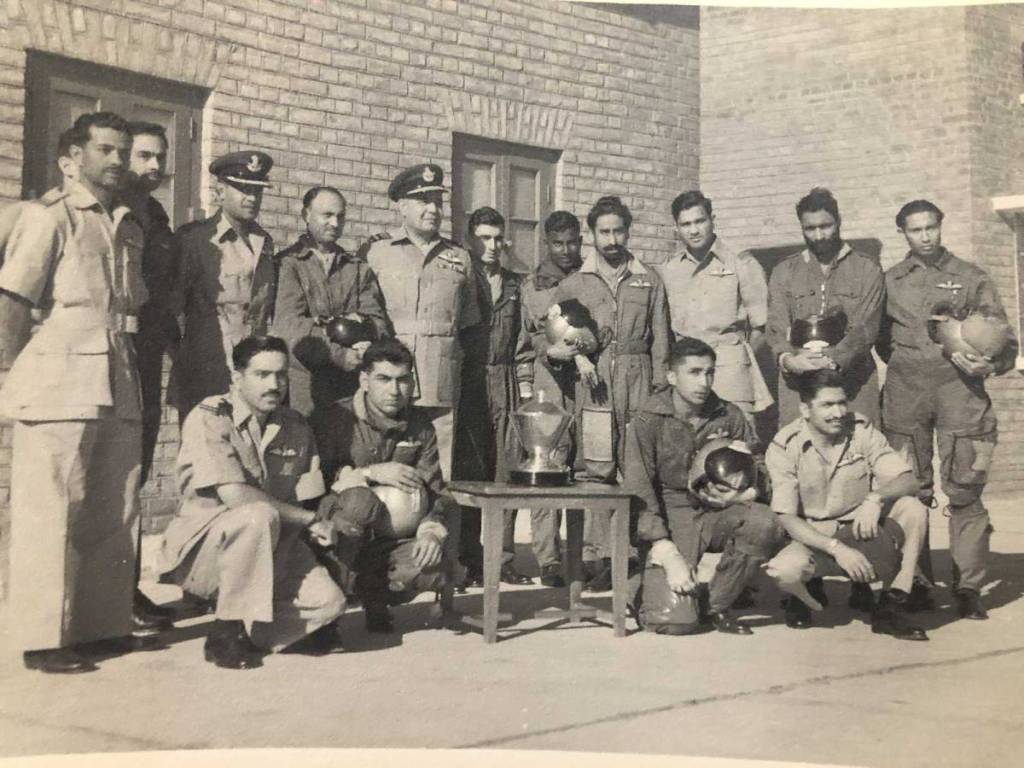
Ranji’s experiences as a front-line pilot made him invaluable in this role. He helped develop new protocols and standards to ensure the IAF remained at the peak of combat readiness. Though less glamorous than his time in the cockpit, this work was no less vital to the nation’s defence.
When war erupted in December 1971, Ranji was attached with 29 Squadron, the “Scorpions,” based in Sirsa. Throughout the conflict, he flew numerous escort and Combat Air Patrol missions, safeguarding Indian airspace and supporting ground operations.
On December 16, the day that would see the birth of Bangladesh, Ranji’s skills were again tested. During a Mystère escort mission, Flight Lieutenant Menon of 31 Squadron fell victim to enemy anti-aircraft fire while attacking ground targets. Menon’s aircraft sustained severe damage, and the cockpit was splattered with blood from his wounds.
In this moment of crisis, Ranji’s legendary composure shone through. With Wing Commander Sawardekar, the commanding officer of 29 Squadron, Ranji took charge of the situation. He talked the injured Menon through the precarious journey back to base with a calm and reassuring voice. This display of leadership under fire exemplified the bonds of brotherhood that define the fighter pilot community.

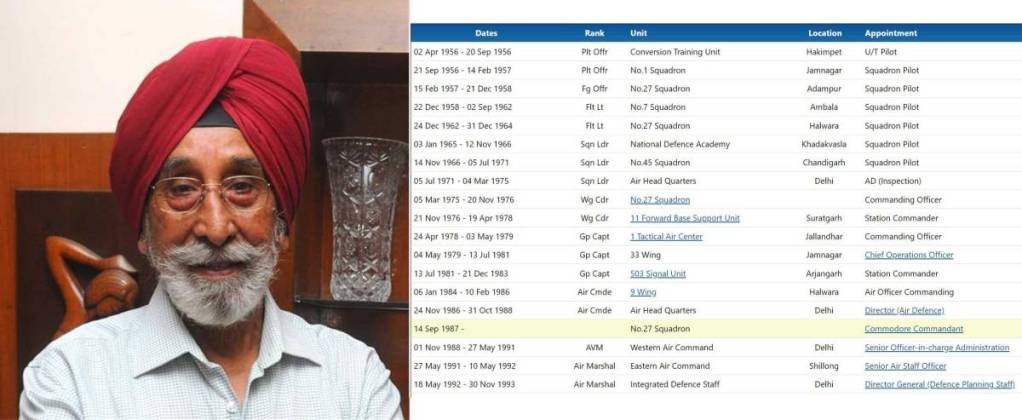
March 1975 saw Ranji promoted to Wing Commander and given command of his beloved 27 Squadron. It was a homecoming in the truest sense, allowing him to fly the Hunter aircraft again, which had played a significant role in his early career. Under Ranji’s leadership, 27 Squadron continued to uphold its reputation for excellence, with its pilots benefiting from his vast experience and nuanced understanding of air combat.

Senior Roles
As Ranji’s career progressed, his leadership abilities were expressed in increasingly senior roles. His command of Suratgarh Air Base demonstrated his capacity to manage the operations of a fighter station. This was followed by a stint as Commanding Officer at 1 Tactical Air Command (TAC) in Jalandhar, where he honed his skills in coordinating air operations with ground forces.
Ranji’s strategic acumen came to the fore as Chief Operations Officer at Jamnagar Base. Here, he oversaw the intricate dance of daily flight operations, maintenance schedules, and combat readiness. As Commander of the Signal Unit at Arjangarh near Delhi, he showcased his adaptability as he mastered the critical domain of Air Defence.
The pinnacle of Ranji’s operational command came with his appointment as Air Officer Commanding of Halwara Air Base. As an Air Commodore, he was now responsible for one of the IAF’s most strategically important installations. Under his guidance, Halwara maintained its reputation as a centre of excellence for fighter operations.

Ranji’s career reached new heights when he was appointed Senior Air Staff Officer of the Eastern Air Command. His promotion to Air Marshal in 1991 – becoming only the 115th IAF officer to achieve this rank – was a testament to his exceptional service and leadership.
Before his retirement in November 1993, Ranji took on one final challenge. He joined the Defence Planning Staff as its Director General, a precursor to today’s Integrated Defence Staff. He helped shape India’s long-term military strategy in this role, drawing on his vast operational experience and strategic insight.
Throughout his illustrious career, Ranji logged an impressive 3,000 flight hours across sixteen aircraft types. His particular affinity for the Hunter and MiG-21 was evident, as he spent significant time mastering these iconic fighters.

Retirement
Upon retiring from the IAF, Ranji settled in the serene environs of Chandigarh. This choice reflected his calm demeanour and desire for a more contemplative life after decades of high-stakes military service. However, retirement did not mean inactivity for the former Air Marshal.
Ranji’s analytical mind and wealth of experience found new expression through his writing. He became a contributor to various print media outlets, penning insightful columns on national security and defence strategy matters. His book on National Security further cemented his reputation as a thought leader in the field.
In a surprising turn, Ranji decided to enter local politics. He successfully ran for a seat in the Chandigarh Municipal Corporation, bringing his leadership skills to bear on civic issues. With characteristic humour, he often remarked on the need to “unlearn” certain military habits in his new role, chief among them the expectation of punctuality.

Ranji’s influence extended far beyond his impressive career. His son and son-in-law both followed in his footsteps, joining the IAF and carrying forward his legacy of service and excellence. This family tradition underscored the deep impact Ranji had, not just as a military leader but also as a father and mentor.
Air Chief Marshal (Retd), AY Tipnis who served with Bedi in 1963-64 with 27 Squadron flying Hunters added –
A stickler for service norms and deeply respected, Air Marshal Ranjit Bedi had a remarkably well-rounded career. Despite his serious demeanour, which could sometimes obscure his soft and caring nature, those who served with him, like me, came to appreciate his profound compassion. He was a thorough professional, indeed.
As we remember Air Marshal Ranjit Singh Bedi, we honour not just a pilot or a commander but also a man whose life was a testament to the highest ideals of military service. Ranji’s journey from a young cadet to one of the IAF’s most respected leaders inspires future generations of Indian aviators. His legacy is not measured merely in ranks achieved or medals won but in the countless lives he touched and the example he set of unwavering integrity, compassion, and dedication to duty.
In the ever-changing world of military aviation, where technology and tactics constantly evolve, the principles that guided Ranji’s life remain timeless. His story reminds us that authentic leadership is built on a foundation of personal excellence, ethical conduct, and a deep commitment to the welfare of those under one’s command. Air Marshal Ranjit Singh Bedi may have left the earthly realm, but his spirit continues to soar in the hearts of all who aspire to serve with honour in the skies above India.
⭐ This post previously received 4.9/5 from 96 readers in our legacy system.


Leave a Reply