
After India gained independence, the Indian Air Force embarked on a mission to expand its network of airbases, seeking to cement its presence across the nation. Among the many planned bases, one stood out for its potential to become a cornerstone of the IAF’s operational might: Maharajpura, a quaint village nestled near the historic city of Gwalior. Maharajpura (commonly spelt as Maharajpur) was envisioned to house a heavy bomber fleet, a plan that promised to reshape the IAF’s capabilities. However, destiny intervened, and the journey of Gwalior took an unexpected path, marked by a series of challenges and intriguing turns. This narrative explores the captivating saga of Gwalior, the obstacles that thwarted its early aspirations, and its eventual transformation into a vital hub for the IAF, now home to the formidable Mirage-2000 fleet and the prestigious Top Gun School of India, TACDE.
The Strategic Necessity
Maharajpur, located about 10 kilometres from the iconic Gwalior Fort, was once a peaceful village focused on cattle grazing, agriculture, and dairy farming. In 1937, the Maharaja sanctioned the construction of a seaplane base at Madhosagar Lake for Imperial Airways and an aerodrome at Maharajpur. By 1940, this serene settlement had been transformed into an operational airstrip. With the onset of World War II, Maharajpur evolved into a Royal Air Force staging post, designated as No. 49 Staging Post.
After World War II, the RAF deemed the airfield surplus to requirements and transferred it back to the Maharaja. Seizing this opportunity, the Maharaja upgraded and commissioned Maharajpur as a full-service civil aerodrome. In collaboration with aviation pioneer JRD Tata, the Scindia family had been invested in developing aviation infrastructure and promoting civil aviation since the 1920s. However, in late 1946, the Ministry of Defence retook control of Maharajpur, with the Maharaja retaining the right to use and control some hangars and buildings.

A pivotal aspect of the Indian Air Force expansion was the establishment of new airbases to accommodate a burgeoning fleet of aircraft, including heavy bombers. These bombers, crucial for long-range offensive strikes, necessitated specific criteria for their bases. They required long, sturdy runways to bear their weight, ample space for personnel and equipment, and a safe distance from borders to avert potential attacks. Furthermore, an armament training range in the vicinity was indispensable for pilot training.
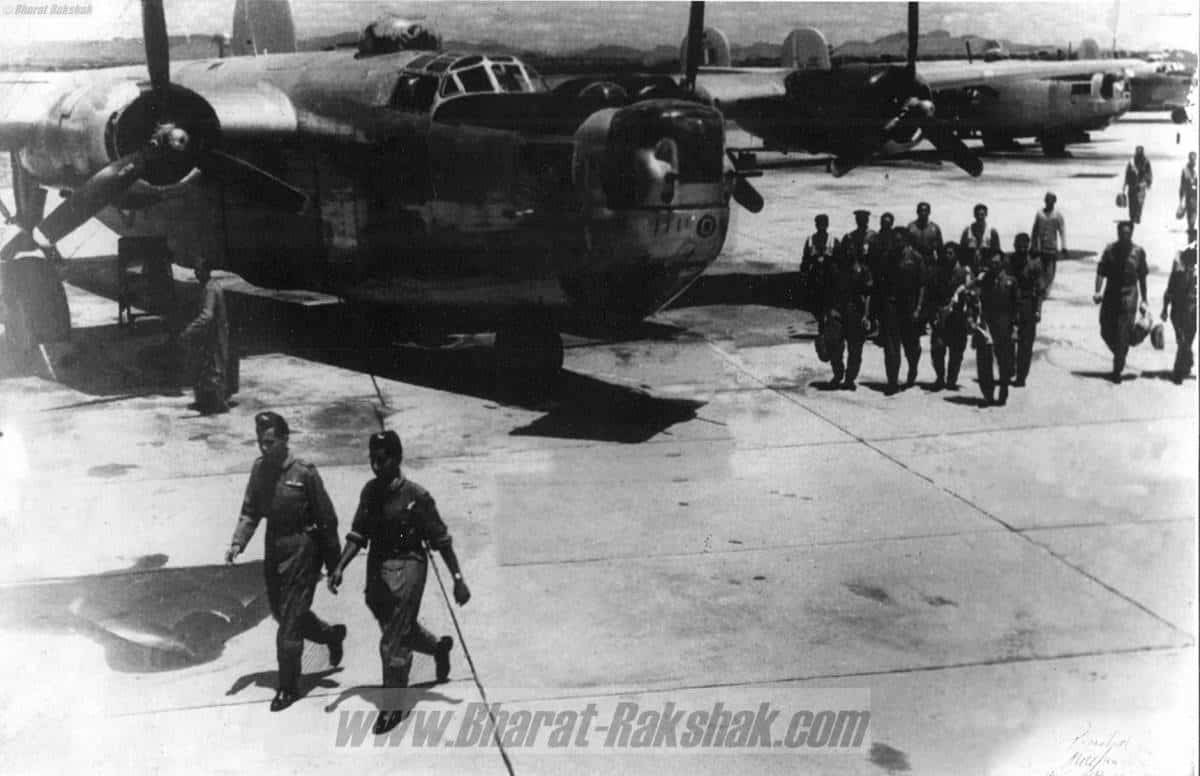
In a remarkable display of ingenuity, Hindustan Aeronautics Limited (HAL) and the IAF collaborated to resurrect Liberator bombers left behind by American and British forces. This initiative created a small but formidable bomber aircraft fleet, forming the No. 5 Squadron, IAF, as a Heavy Bomber squadron. Initially raised in Kanpur in November 1948, where the aircraft were being restored, the squadron was moved to Pune in the summer of 1949. However, this relocation was only a temporary measure. The IAF urgently needed a permanent base for its heavy bombers and began an intense search for a suitable location to serve as a heavy bomber wing.
The Choice of Gwalior
On July 26, 1950, a note signed by Group Captain SN Goyal, Director of Organization at Air Headquarters, cemented Gwalior’s fate as the chosen site for the Indian Air Force’s new base. The decision came after carefully considering five potential locations: Gwalior, Jamnagar, Bhopal, Amarda Road, and Cholavaram.
Bhopal boasted an excellent airfield and related infrastructure, with the Nawab of Bhopal having notably supported the Air Force. No. 12 Squadron of the IAF had been based there in 1945-46. Despite these advantages, Bhopal was deemed unsuitable for heavy bombers due to several critical factors. The presence of dangerous hills in the approach funnel posed significant risks; its location within the quasi-static monsoon belt could interfere with flying operations, and the cost of extending the runway was prohibitive.
Established by the RAF as an Air Fighting Training Unit (AFTU) in February 1943, Amarda Road was another option. However, its position on the fringe of the cyclonic belt in Midnapur District made it unsuitable for a permanent armament practice camp. Additionally, by 1950, the airfield was fully occupied by refugees from East Pakistan, further complicating its potential use.

Cholavaram airfield appeared ideal in many respects but lacked a suitable location for an Air Firing and Bombing range due to extensive fisheries and shipping activities. As for Jamnagar, the ruler of Nawanagar provided full support, making it an attractive option. However, its proximity to potential adversaries meant it offered less defensive depth for the bombers, a significant strategic drawback.
Ultimately, Gwalior emerged as the preferred choice. It was an operational base with existing hangars and buildings, and it featured a 2050-yard by 50-yard macadam over a concrete runway, along with a smaller subsidiary cross runway. Its ideal location, combined with these operational assets, made it a prime candidate for the new heavy bomber base, which also had the potential to have an armament range in its vicinity. Situated 617 feet above mean sea level and surrounded by small hillocks on the north and south sides, Gwalior offered both strategic and logistical advantages for the Indian Air Force’s expansion plans.
Gwalior was officially designated to become No. 5 Wing, a significant expansion as the IAF had only four wings: Jammu, Pune, Palam and Agra. It was also set to be the home of No. 5 Squadron, which operated the Liberator bombers. A substantial budget of INR 4.6 million was approved to create the necessary infrastructure, including technical and domestic facilities, to support the new wing.

A ruler and some money
When the planning board convened to execute the plan for establishing the No. 5 Wing at Gwalior, they encountered a series of formidable challenges. Central to these issues were 15-20 buildings the Maharaja of Gwalior used, positioned right in the heart of the proposed base. These structures were vital to the Maharaja’s operations, and despite numerous attempts to devise a workable solution, the board could not reconcile the IAF’s requirements with the Maharaja’s existing usage. Understandably, the Maharaja was reluctant to relinquish control over these critical facilities.
Tests conducted on the main runway revealed a bearing strength of 59,000 lbs SWL (Single Wheel Load), which was adequate for the Liberator’s SWL of 32,000 lbs. However, the runway surface was in poor condition, and a 2-foot premix carpet intended to smoothen it had disintegrated. The main runway required an extension to 2750 yards, with an additional 300-yard overshoot area. The subsidiary runway also needed extension and resurfacing to meet operational standards.
The main apron, which could accommodate only six Liberators, needed to be extended to accommodate ten. Furthermore, the existing hangar required significant upgrades, and the base faced a critical shortage of water sources, lacking proper electrification and sewage systems. These deficiencies necessitated comprehensive infrastructure development. As the scope of required modifications became apparent, the project costs escalated dramatically. Initially estimated at INR 4.6 million, the budget ballooned nearly tenfold.
The challenges the Maharaja’s facilities posed and the skyrocketing budget ultimately proved impossible. The difficulties in aligning the IAF’s needs with the existing conditions at Gwalior left the project uncertain. At this point, further documentation of the saga becomes scarce, leaving us to piece together the story through conjecture and hindsight.

The Outcome
The Indian Air Force was forced to reconsider its plans for Gwalior amid the numerous insurmountable challenges. As a result, No. 5 Squadron remained stationed at Poona, which subsequently also became the home for two additional heavy bomber squadrons, No. 6 and No. 16. Poona retained its status as the designated bomber base even when Canberra aircraft replaced the Liberators.
However, Poona had a significant limitation: it lacked a firing range. To address this, the IAF opted for the next best option among the initial five candidates—Jamnagar—and established an air-to-air and air-to-ground firing range. This facility, which existed in April 1951, was named the Armament Training Wing (ATW). Thus, the strategic role envisioned for Gwalior was effectively split between Poona and Jamnagar. Interestingly, the ATW later housed the Pilot Attack Instructor School, which evolved into the Tactical and Combat Development Establishment (TACDE), which relocated back to Gwalior.
Well into the late 1950s, the Maharaja of Gwalior continued to enjoy access to the hangars and other buildings for his fleet of aircraft. Nevertheless, the IAF had long-term plans for the base and retained the right to alter this arrangement. In 1962, the No. 3 Air Force Selection Board (AFSB) was established at Gwalior, followed by the establishment of No. 2 Base Repair Depot (BRD) in 1963. While the AFSB was disbanded in 1965, the BRD remained operational until 1982. The depot overhauled various aircraft, including HT-2s, Harvards, Otters, Austers, Bell Helicopters, and Alouettes. During this period, the Directorate General of Civil Aviation managed Air Traffic Control through a civilian Aerodrome Officer.
In 1982, the IAF upgraded Gwalior to a flying base and designated 40 Wing. Initially, transport aircraft from No. 11 Squadron were the sole occupants until 1985, when the Mirage-2000 was inducted into the IAF. Since then, Gwalior has become synonymous with the entire Mirage fleet, a status that still endures.

In an ironic twist, the first Indian squadron to operate from Gwalior was No. 7 Squadron, which relocated there in February 1944 to support ground forces training for General Wingate’s second Chindit expedition. Over forty years later, No. 7 Squadron returned to Gwalior, again establishing it as their permanent home.
The 5 Wing is born
The journey to establish the 5 Wing of the Indian Air Force is a story filled with twists and turns. Following India’s independence in 1947, the IAF aimed to set up a fighter wing in the eastern part of the country, identifying Kalaikunda as a potential base. However, financial constraints and more immediate demands delayed the establishment of Kalaikunda for several years.

In the meantime, the IAF began expanding its bases during the early 1950s. On March 16, 1950, three new wings were established: 305 Wing at Adampur, 306 Wing at Halwara, and 310 Wing at Barrackpore. By September 1951, 307 Wing was also established at Ambala. Curiously, the IAF used a 300 series numbering system for these wings, a decision whose rationale remains unclear.
By the mid-1950s, the IAF reverted to its original numbering system, discontinuing the 300 series nomenclature. Consequently, the wings were renumbered: 310 Wing at Barrackpore became 6 Wing, 307 Wing at Ambala became 7 Wing, 305 Wing at Adampur became 8 Wing, and 306 Wing at Halwara became 9 Wing. Notably, none of these establishments were designated as 5 Wing, leaving a gap that intrigued many.
The mystery of the 5 Wing was finally resolved in December 1956 when Kalaikunda was officially established as a base and took on the designation of 5 Wing. This new wing became the home of the entire IAF Mystere fleet, fulfilling the long-awaited vision of creating a significant fighter wing in the eastern part of the country. This establishment also did justice to the original vision of 5 Wing, which had been envisaged at Gwalior as a Heavy Bomber base.
⭐ This post previously received 5.0/5 from 50 readers in our legacy system.


Leave a Reply