

Air Marshal Dushyant Singh, renowned for having the highest flying hours on the Canberra aircraft in the Indian Air Force, sadly passed away today at 86. He was known as a consummate professional and a strict leader who insisted on excellence.
Dushyant Singh began his journey at the 8 JSW course (now known as the National Defence Academy) and was commissioned into the IAF’s 67th Pilot Course in 1956. He was assigned to the Fighter stream. During his initial three years of service, he served in Squadrons No. 3, 20, 4, and 29, piloting the Toofani and Vampire aircraft.
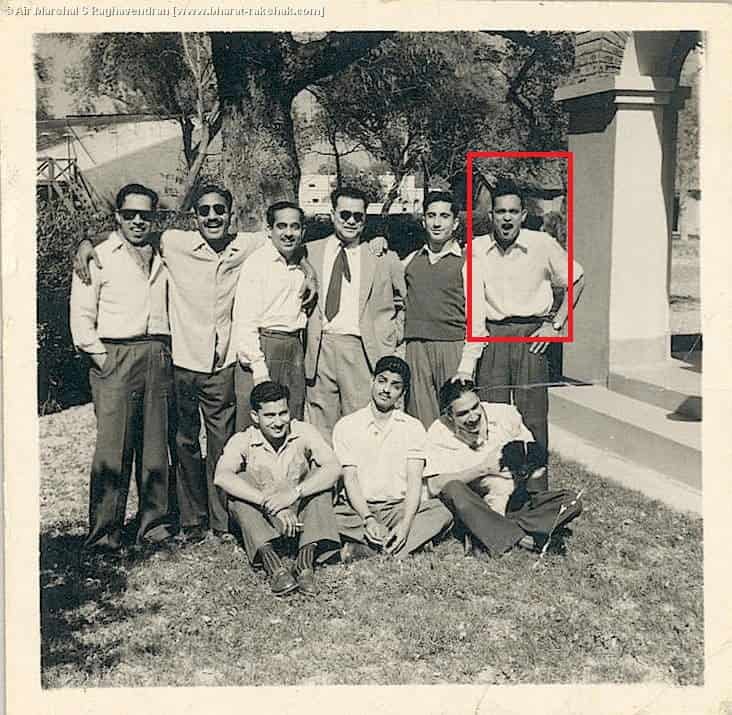
In 1959, he was assigned to the Jet Bomber Conversion Unit to train on the newly acquired Canberra aircraft. Little did he realise that by the end of his career, he would accumulate a remarkable 4,673 flying hours on the Canberra, participating in numerous IAF operations. This achievement would immortalise him in the record books as a legendary figure.

His first operational assignment came in 1961 when he was deployed to Congo with 5 Squadron. KS Nair narrated the story of Dushyant’s impeccable raid during this mission. Despite facing intense and accurate anti-aircraft fire, Dushyant skillfully delivered his cannon shells directly into the Elizabethville Post Office, causing devastating damage.

Following his time in Congo, Dushyant Singh transitioned into a role as an instructor at the Flying Instructors School (FIS). He dedicated many years to training establishments as an instructor at the Pilot Training Establishment (PTE), Jet Bomber Conversion Unit (JBCU), and with the Iraq Air Force. He also held positions as the Commandant of the Elementary Flying School and the College of Air Warfare (CAW). During this period, his reputation as a proficient instructor and a demanding professional continued to grow.

In 1971, he was honoured with the Vishisht Seva Medal (VSM) for his significant contributions in Congo, especially with the 106 Squadron during the 1965 war. His role was confidential and critical; his citation acknowledges his execution of numerous operational sorties over challenging terrain and in adverse weather conditions, accomplishing tasks of national importance.
In 1972, he was named the Project Coordinator of Exercise Storm Exchange, which involved weather reconnaissance across the Indian Subcontinent using the Royal Air Force Canberra PR 719. His relentless dedication in this role earned him the Vayu Sena Medal. From 1972 to 1976, he served as the Flight Commander of 106 Squadron.
Fittingly, he was appointed as the Commanding Officer of the 106 Squadron in 1976-77. By 1983, he had risen to the position of Air Officer Commanding (AOC) of Jamnagar. Air Marshal Adi Gandhi recalls a notable incident where, following an accidental bomb explosion in Jamnagar, Dushyant bravely drove a crash tender through a barbed wire fence to reach the ammunition magazine.
Between 1987 and 1995, he served as the Senior Air Staff Officer (SASO) of the Jammu & Kashmir and Central Air Commands. He retired as the Air Officer Commanding-in-Chief of the Eastern Air Command and was honoured with the Ati Vishisht Seva Medal (AVSM). “Dushi Tales,” anecdotes reflecting his no-nonsense approach combined with his humane side, will forever echo throughout the Indian Air Force.

Though I never met Air Marshal Dushyant Singh, also known as Dushy Sir, in person, we developed a close bond through years of exchanging WhatsApp messages about the Indian Air Force. His memory remained sharp, and his ability to articulate thoughts was always precise. He was always ready to offer assistance and guidance. His absence will be deeply felt, and I will miss our interactions. May he rest in peace.
Originally published on Twitter


Leave a Reply